Pricing & Cost Guide Areas We Serve FAQ Get a Free Estimate ☎ Call (972) 600-2649
★★★★★ Commercial & Residential Pavement Contractors — Plano, TX

Plano Paving Contractors. Pavement Done Right.

We pave and maintain parking lots, HOA streets, and asphalt or concrete driveways — backed by a 1-year written warranty.

  • Free Estimates
  • Asphalt & Concrete Crews
  • 1-Year Written Warranty
  • Local & Family-Owned
Why call us first

3 Reasons Plano Calls Our Pavement Contractors First

Asphalt Paving & Concrete Paving Built for Plano's Clay

Most pavement failures in Plano start below the surface, in soil that's shrinking and swelling underneath it. Our Blackland Prairie clay has one of the highest shrink-swell ratings in America, moving with every wet spring and dry August. Every quote we write specifies inches of compacted stone base, and where the clay calls for it, lime-stabilized subgrade, plus inches of compacted asphalt or concrete, not just "laid" thickness. This is also the best way to compare bids apples-to-apples.

1-Year Paving Warranty In Writing

Every job carries a written 1-year workmanship warranty that spells out what it covers: the compacted thickness we quoted, the compaction we rolled, the drainage we graded. We can stand behind that because when the base is built for our clay and the water is managed, we don't get callbacks. And if we ever built it wrong, we make it right.

Insured Paving Contractors in a Trade Texas Doesn't License

Here's something most property owners don't know: Texas doesn't license paving contractors. Anyone with a truck can call themselves one, which is how "leftover asphalt" crews work Plano communities every summer. So the vetting is on you, but we make it easy: we're a local, family-owned company that's been paving Collin County for 22 years, we hand you certificates of insurance before work starts, every scope comes in writing with thickness numbers, and our references are close enough to drive past, from retail lots off Preston Road to driveways in Los Rios.

Two kinds of clients, one standard of work

Commercial & Residential Paving Contractors in Plano

Most of our Plano work is parking lots, HOA streets, and campuses; the rest is homeowners — and because this is a concrete-driveway town, our crews build in both materials.

For Businesses, HOAs & Churches

Parking Lot Paving, Resurfacing, Striping & Maintenance

We handle everything your lot and pavement need: parking lot resurfacing and repaving, new construction, sealcoating, crack sealing, pothole repair, and fresh striping with ADA/TAS-compliant accessible spaces. We phase the work so you never have to close, with proof of insurance and written scopes for your approval chain.

Request a Commercial Bid →
For Homeowners

Concrete & Asphalt Driveways: New, Repair & Replacement

Given most Plano driveways are concrete, we regularly work with both materials, concrete and asphalt. Whether it's cracked or heaved panels, flaking (spalled) surfaces, approaches sinking where they meet the street, we can repair or replace exactly what failed. When asphalt is the smarter buy — a long private lane, acreage east of town, a budget repave — we build that too, over 6–8 inches of compacted base sized for our clay.

Get My Driveway Quote →
Straight answers, North Texas edition

Asphalt or Concrete in Plano? How to Pick the Right Paving, and Avoid Paying Twice

This section covers which surface fits your project, what it should cost, and why some pavement in Plano fails in five years while the same material a street over lasts thirty. This is the advice we give at every free estimate.

Replacing a Driveway? When Concrete Is Right vs. When Asphalt Saves You Thousands

Builders here have poured concrete driveways as standard for decades, and for a front-of-house suburban driveway it's usually the right call: 30+ years of life, a clean look, no need for sealcoating. And in many Plano communities, HOA rules require it anyway. Where asphalt wins is footage. At half the cost of concrete, a typical two-car driveway saves $2,500–$4,000, and a 400-foot acreage lane out toward Parker or Lucas saves $20,000+ — plus you're driving on it in days, not a week, and repairs are cheaper and blend in. That's why long private lanes and most large surface parking lots in Collin County are asphalt. We build both, so our recommendation follows what's best for your property.

Why Some Pavement Fails in 5 Years in Plano, and How to Make Sure Yours Doesn't

The clay under Plano swells in a wet spring and shrinks hard in an August drought, which is hard on the pavement sitting above it. Concrete tends to crack when that movement piles up at joints and corners; asphalt flexes and holds up a bit better. But on untreated clay, both fail early.

The fix isn't a thicker pavement. It's what goes under it: we treat the clay with lime or moisture-condition it so it stops moving, build a compacted base sized for the soil, and grade the site so water can't cycle under the pavement. TxDOT lime-treats this same clay under nearly every road it builds here, asphalt or concrete. Done right, that prep is the difference between a driveway you have to replace in 5 years vs. one that lasts multiple decades.

Sealcoating Every 2–3 Years Is the Cheapest Way to Double Your Asphalt's Life

The thing that ages asphalt quickly in Plano isn't traffic, it's UV rays. A hundred-plus days of intense sun each year oxidizes the binder that holds asphalt together, which is why lots fade from jet black to brittle gray. Gray asphalt is porous, so rain soaks through it instead of running off. That water reaches the clay below, the clay swells and shifts, and the pavement on top cracks and sinks along with it. Sealcoating every 2–3 years is like sunscreen for your pavement: it blocks the UV damage, which is why it's the highest-return maintenance dollar in North Texas for parking lots, private roads and driveways.

Asphalt Repair in Plano: Fix Cracks in the Fall Before They Turn Into Potholes

Most asphalt repair in Plano starts as a crack you could have sealed for a few dollars a foot. Left open through the fall, that crack fills with rain. Then a cold front comes through, the water freezes overnight, thaws by afternoon, and repeats. Each cycle turns the water in that crack to ice, expands it, and breaks the pavement around it a little more. Add an ice storm Plano gets every few years, and potholes open up across Collin County the week of the thaw, each one costing hundreds to patch. Sealing cracks in the fall with hot rubberized sealant closes the water's way in before the first freeze. It's the cheapest asphalt repair you'll ever pay for, and it prevents the expensive kind.

Paving Over a Gravel Driveway: Asphalt or Chip Seal for Acreage Lanes

Gravel and caliche lanes are still common on the acreage east and north of Plano, and they give you two problems a year. Spring gully-washers cut ruts through them, and August turns whatever's left to dust. Paving fixes both.

The good news is that a lane you've driven on for years has usually packed down into a firm layer we can build on, which cuts the cost of paving it. At the free estimate we check what's actually there: some lanes just need regrading and fresh stone before paving, while a thin layer of gravel over clay has to be built up first. Either way, you'll know the number before we start. And if full asphalt is more than your budget allows, chip seal covers the same lane for ~30–40% less.

Parking Lot Paving Cost in Plano: Why Asphalt Saves Money Now and Later

New asphalt runs $3.50–$7 per square foot; concrete is usually about double. That's why, where city code allows it, asphalt is the sensible choice for Plano's retail lots, church campuses, and office parks, with concrete reserved for fire lanes, dumpster pads, and loading zones that have to carry heavy trucks.

The savings continue after your parking lot is built. Asphalt repairs in sections, so a failed drive lane gets patched or overlaid overnight while the rest of the lot stays open. And with a maintenance plan of crack sealing, sealcoating, and restriping, your asphalt lot can last 20+ years. We can handle all of it, from the paving to the line striping to the upkeep.

Parking Lot Maintenance and Your Property's Value in Plano

For a Plano retail center or office park, the lot is part of the lease. Tenants weigh it at renewal, buyers and appraisers photograph it, and a pothole or a faded accessible space is the first thing a slip-and-fall or ADA complaint points to. Sealcoating, crack sealing, and restriping costs a fraction of one lost tenant or one claim, and it keeps the asphalt out of the expensive repair-and-replace stage. Call us if you're looking for a one-off service or to join our maintenance plan.

For Businesses, Property Managers, HOAs & Churches

Commercial Asphalt Paving in Plano, TX: Parking Lot Repair, Resurfacing & Striping

Whether it's a retail lot that can't close, an HOA street on a reserve-study budget, or a church campus that has to be ready by Sunday, you need pavement work done fast and reliably. We've served Plano for 22 years with your needs in mind: written scopes you can put next to other bids, proof of insurance before we start, and phasing so you can stay open.

🅿

Asphalt Parking Lot Paving
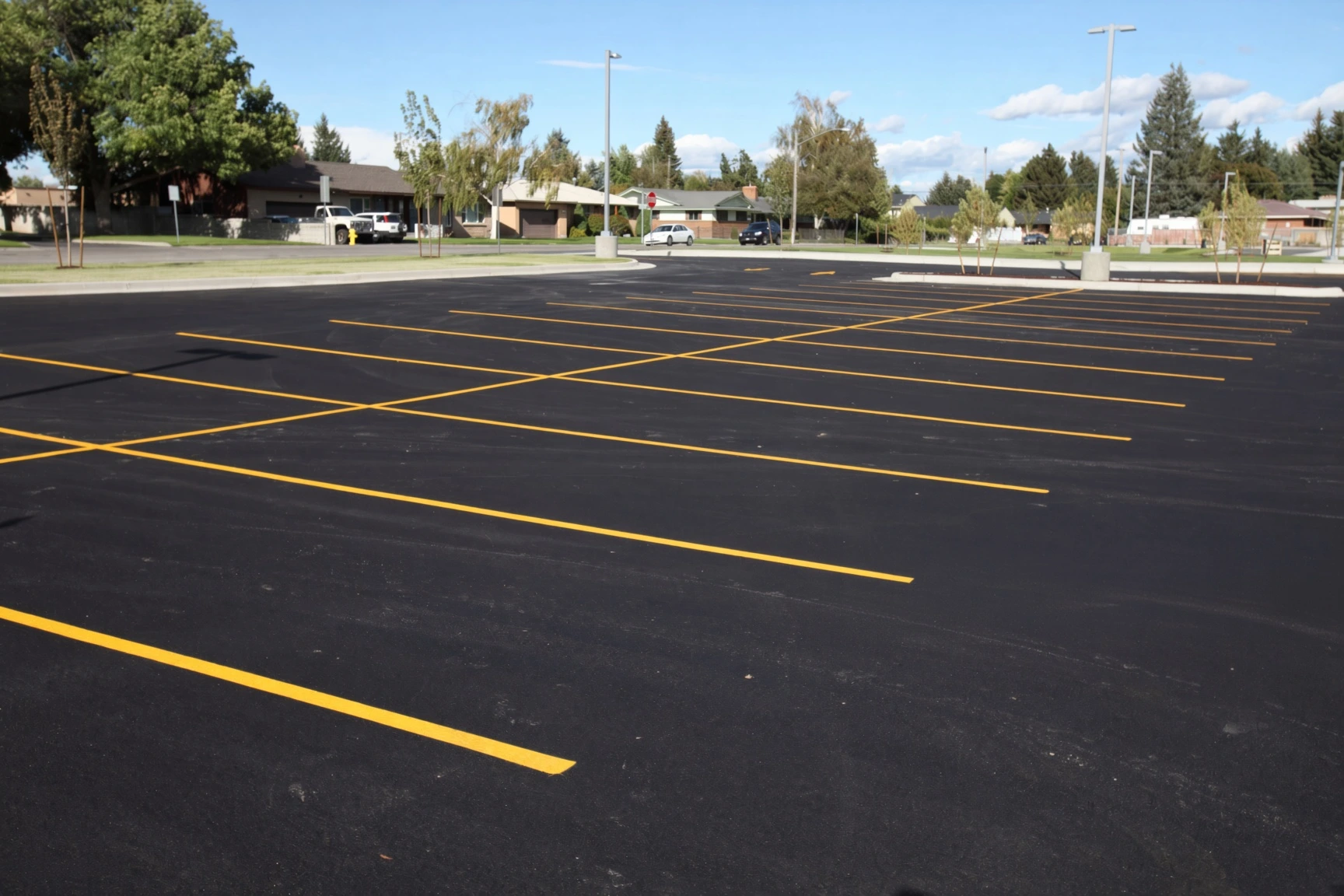
New asphalt parking lot paving at a commercial property in Plano TX

A Plano parking lot typically has delivery trucks at the loading door, hundreds of cars a day, 100-degree summers baking the surface, and clay underneath that moves with every wet-dry swing. So we build with Plano conditions in mind: lime-treated subgrade where the soil calls for it, drainage graded so water never ponds on our flat lots, heavier base and asphalt in drive lanes and dumpster approaches, and standard thickness in the stalls so you're not overpaying.

We handle the complete package for Plano retail centers, churches, medical offices, and HOAs: grading, asphalt paving, the concrete fire lanes the city requires, striping, ADA/TAS-compliant accessible spaces, signage, and wheel stops. We also schedule around your business hours so you can stay open.

  • New parking lot construction, expansions & full rebuilds
  • Drainage designed for flat clay sites
  • Concrete fire lanes, dumpster pads & loading zones built alongside the asphalt
  • Parking lot striping that's ADA/TAS-compliant, accessible spaces & signage included
  • Phased installation so your business never fully closes
🎯

Parking Lot Striping & ADA Compliance
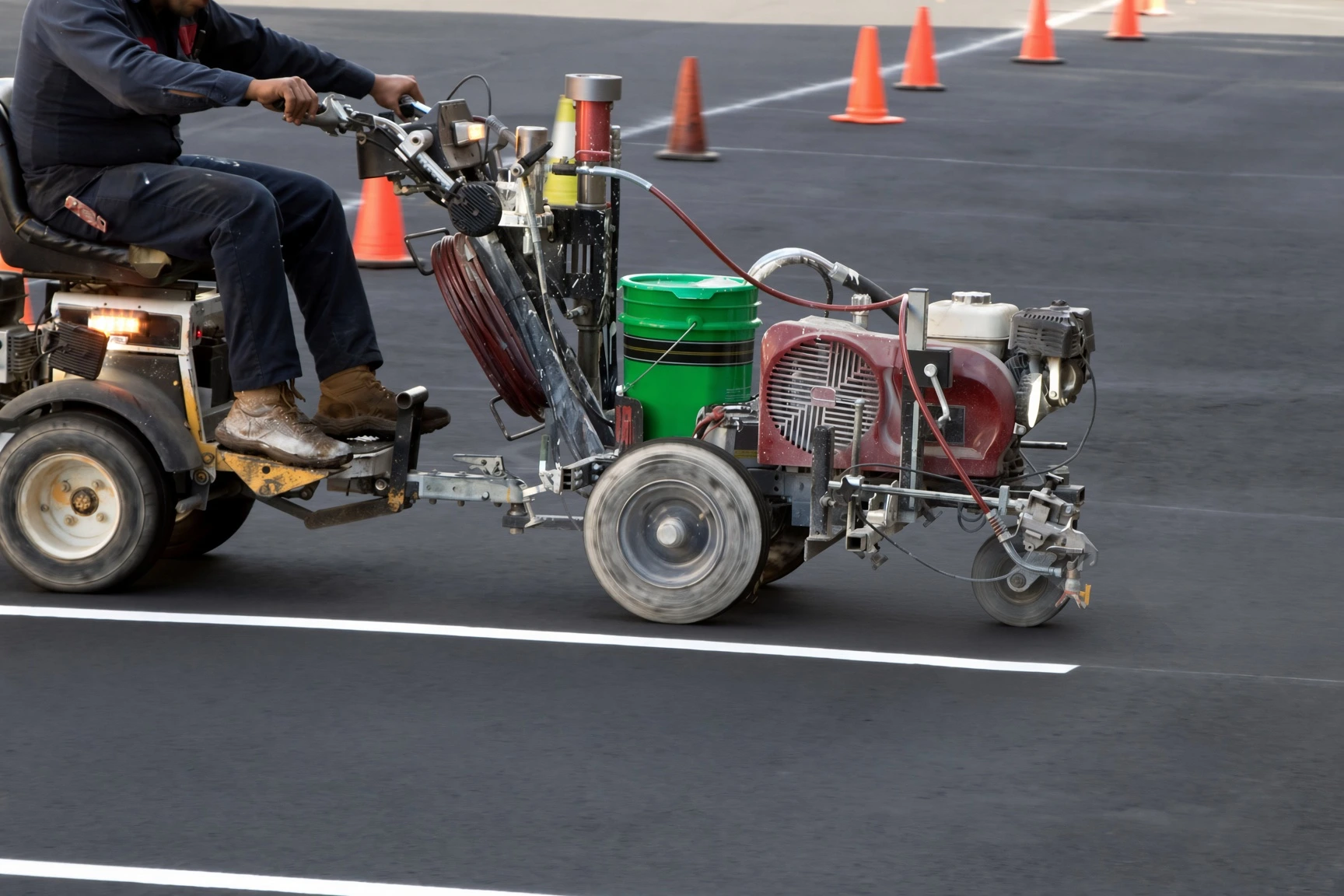
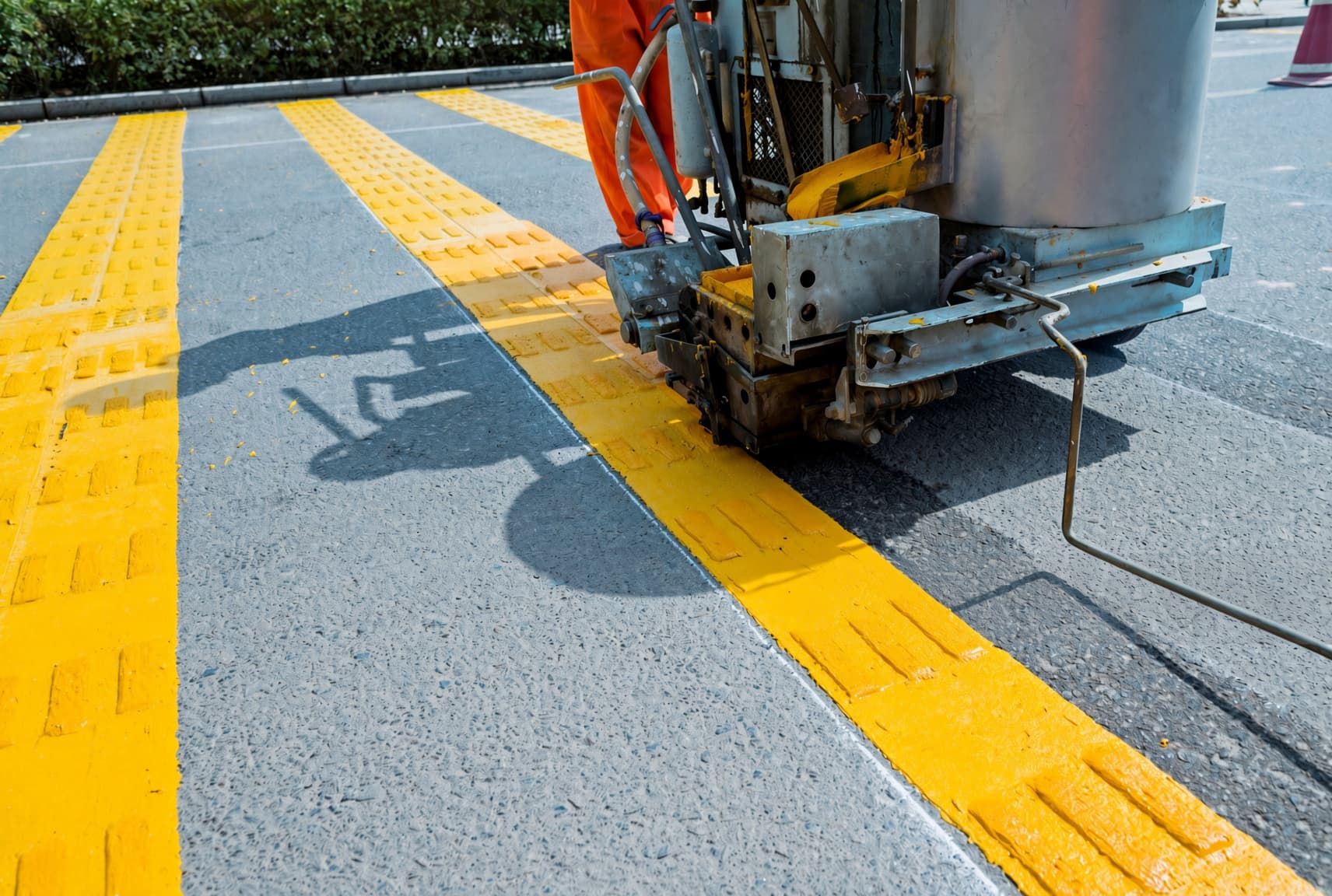
Fresh ADA-compliant parking lot striping at a Plano business

Parking lot lines are the final finish that makes your lot function: stalls sized so doors don't ding, fire lanes marked to City of Plano code, arrows that keep traffic moving, and accessible spaces with correct dimensions, access aisles, and signage. In Texas, accessibility isn't just federal ADA — the Texas Accessibility Standards (TAS) apply, and projects of $50,000 or more require review by a TDLR-registered accessibility specialist. We build a compliant layout into every lot we pave, resurface, or restripe, and we'll tell you when your project crosses the TAS review threshold.

We paint new layouts on fresh pavement, restripe faded lots (every 2–3 years under Texas sun, or with every sealcoat), and redesign parking stall layouts to legally fit more spaces. In older lots laid out decades ago, a good parking lot striper like us can find room for more stalls to serve your community!

  • Parking space striping with durable traffic-grade paint
  • ADA/TAS accessible spaces, access aisles & signage
  • Fire lanes, crosswalks, speed bumps, wheel stops & stenciling
  • Layout redesigns that often add extra parking spaces
🖌

Sealcoating & Crack Sealing
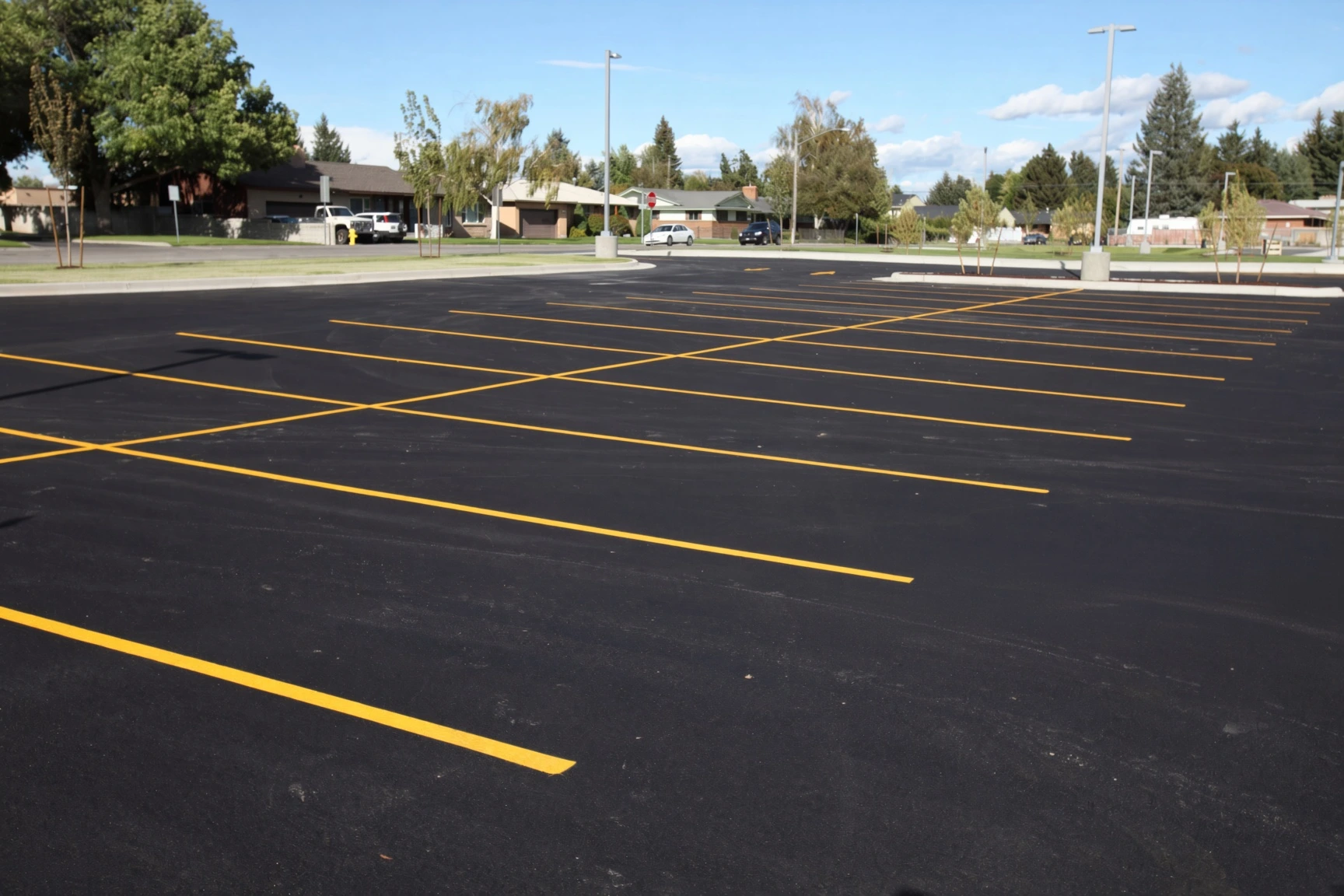
Commercial sealcoating being applied to a Plano parking lot

Asphalt sealcoating matters immensely in Texas. Our commercial-grade sealer blocks the sun's UV rays that oxidizes binder, sheds water before it reaches the clay, and resists the oil and fuel drips that soften pavement in drive-thrus and parking rows. Here in Plano, commercial lots need sealing every 2–3 years, and most of our clients bundle restriping with each coat for a more favorable rate.

Before any sealer goes down, we hot-fill cracks with rubberized sealant (the same material TxDOT uses) which stays flexible through winter instead of hardening and popping out.

  • Commercial-grade sealer at full concentration, not diluted retail product
  • Hot rubberized crack sealing before every coat
  • Sealed lots can double pavement life
  • Sealcoat + restripe bundles for the best price
🏗

Parking Lot Repair, Resurfacing & Asphalt Milling
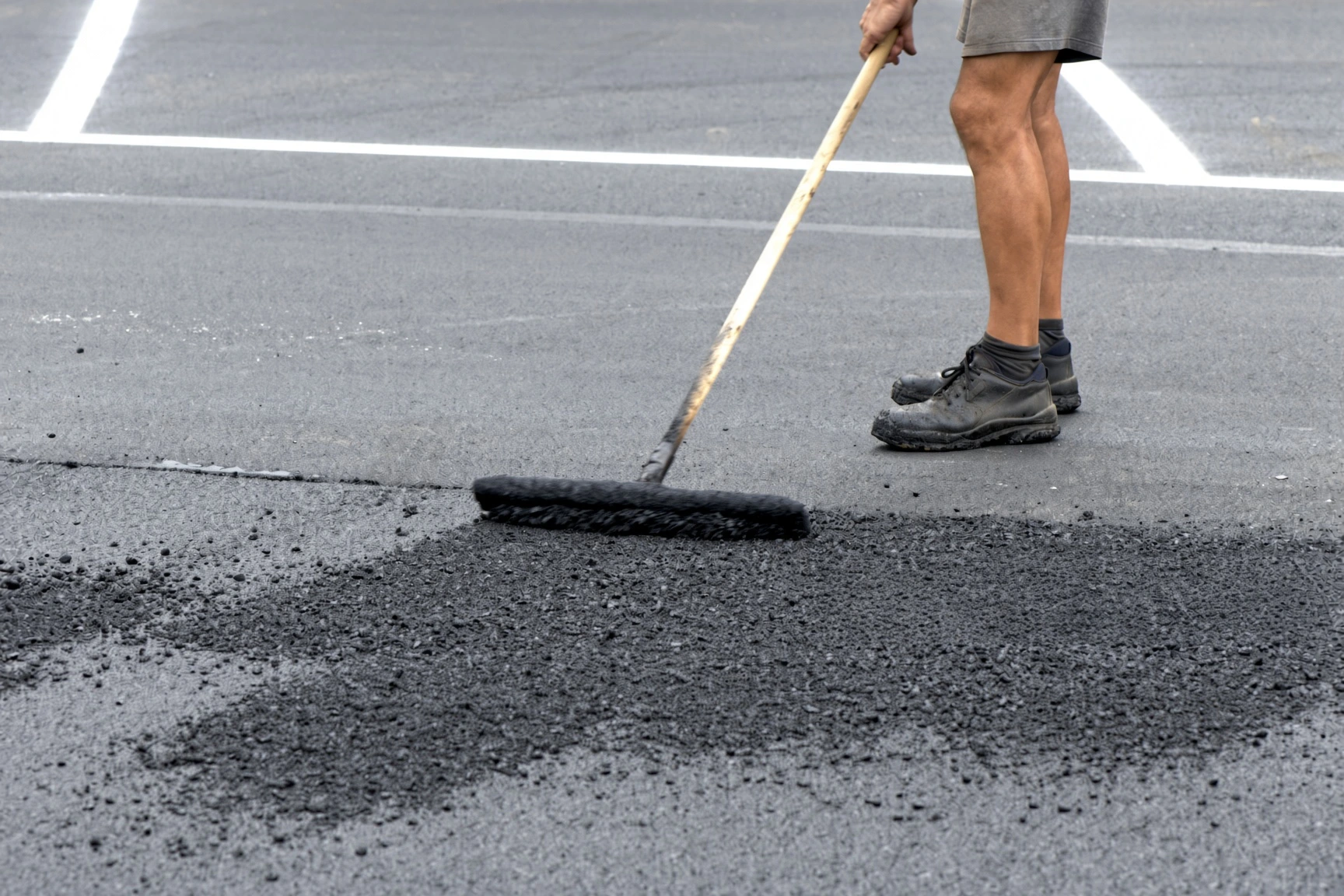
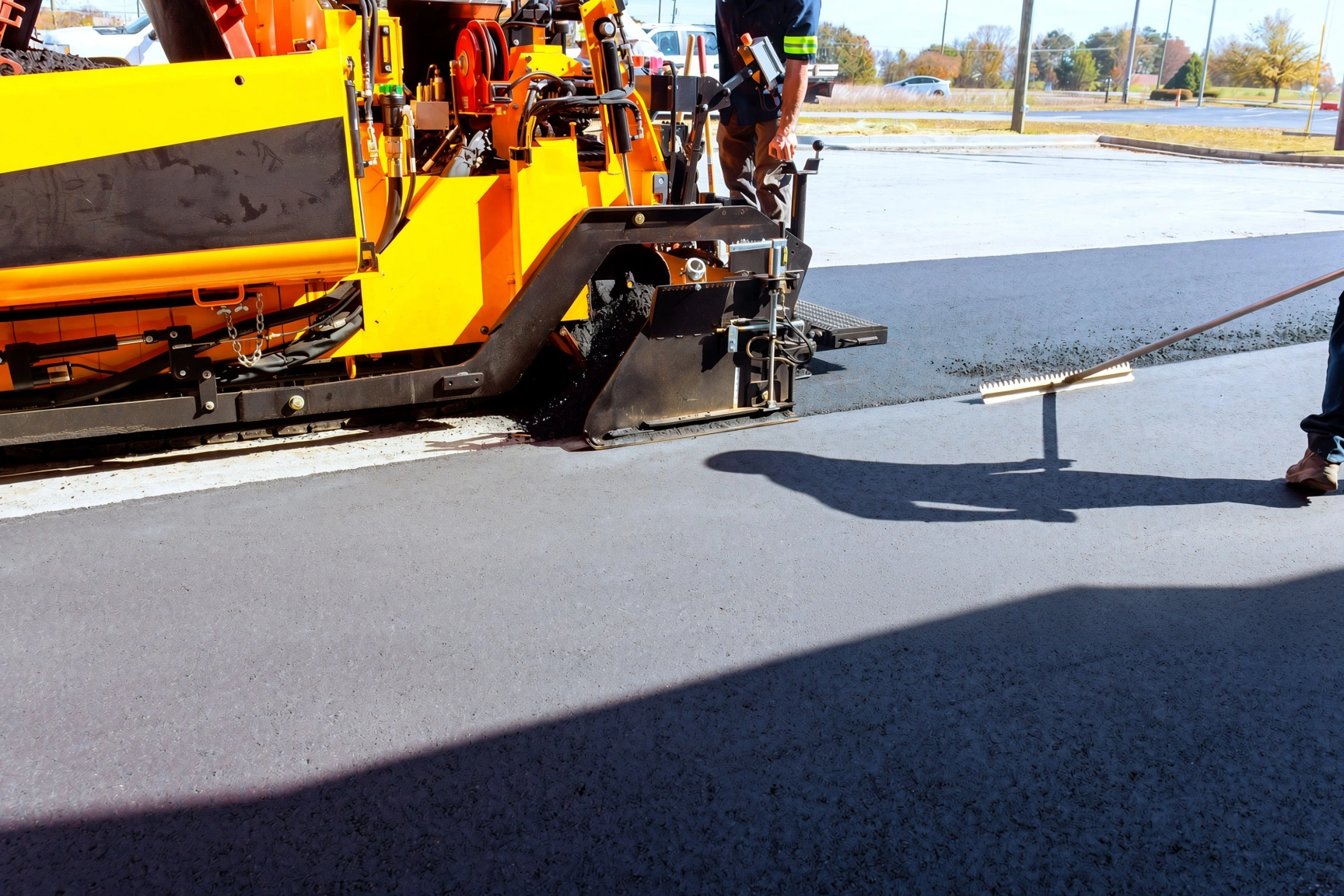
Asphalt milling machine resurfacing a retail parking lot in Plano Texas

Most tired lots in Plano don't need to be torn out, they just need some repair and a new surface. A lot of this city's retail was built in the '80s and '90s boom, and lots along Preston, Coit, Custer, and Parker are aging. We can grind off the top 1.5–2 inches (that's asphalt milling), repair failed spots full-depth, and lay a fresh asphalt overlay across the lot. It looks and drives like new construction at a fraction of replacement cost, and each section is usually drivable within a day or two.

Why milling matters: grinding the old surface off instead of stacking another layer on top preserves your curb heights, ADA slopes, door thresholds, and drainage — it also leaves a rough surface the new asphalt grips. On lots that have already been resurfaced once, milling ensures the resurfacing lasts another decade instead of peeling in a few years.

  • Mill-and-overlay parking lot resurfacing that preserves curbs & drainage
  • Potholes, alligatored areas & failed drive lanes repaired full-depth
  • Fresh striping included in every resurfacing
  • Overnight & weekend phasing for retail that stays open
🛤

HOA, Gated Community & Private Street Paving
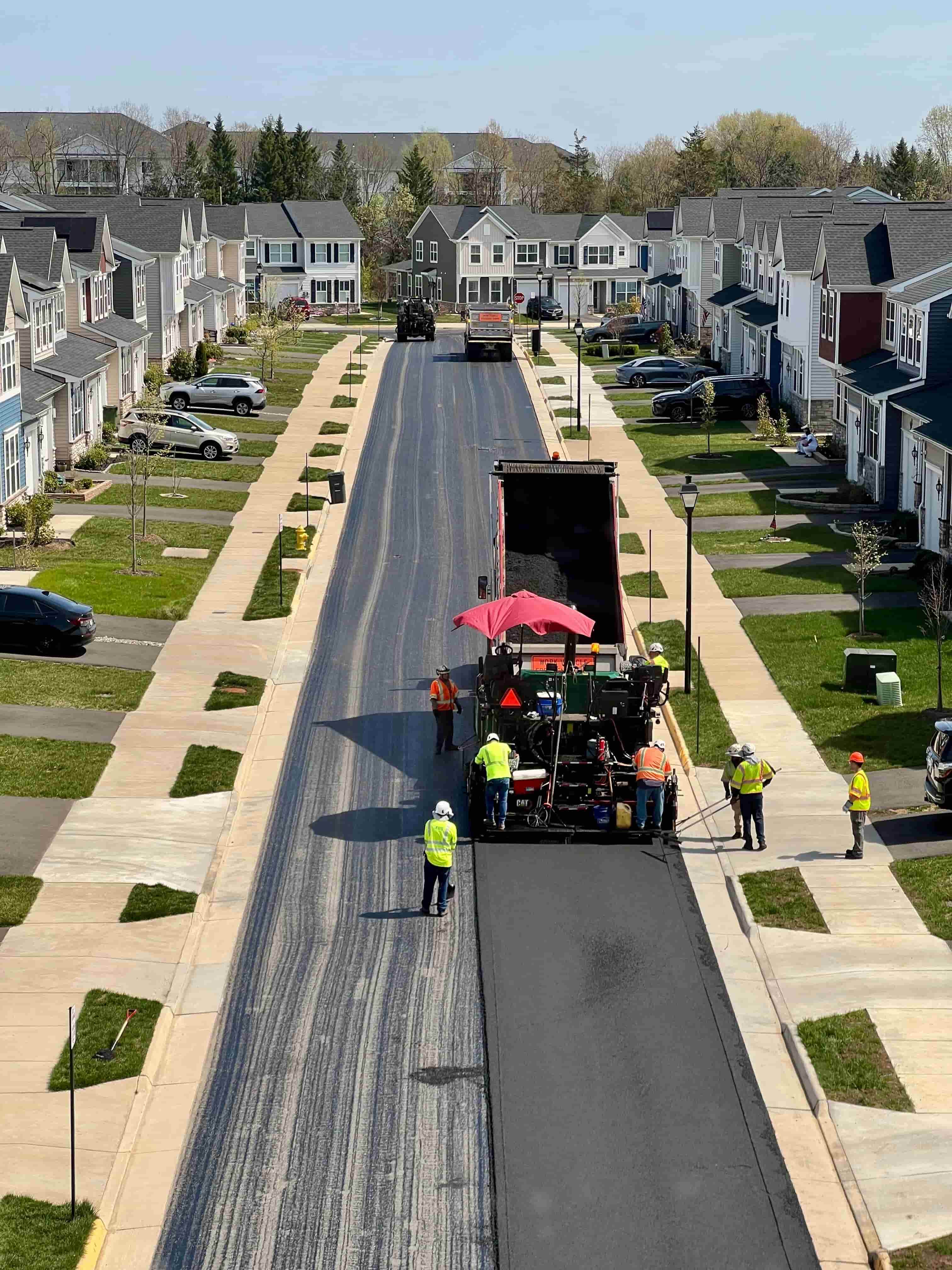
Private street resurfacing in a gated West Plano community

If you live in one of West Plano's gated communities, your HOA owns the streets. The city doesn't maintain them, but garbage trucks, moving vans, and every resident's daily traffic still use them. When the pavement wears out, the board has to pay for it.

We work directly with boards and management companies to get this done. You get a written scope the board can vote on, work phased so every resident can always reach their driveway, and a multi-year maintenance plan that spreads the cost into a predictable annual line item. And because private streets carry heavy trucks, we build and resurface them with the base and thickness a street needs, not the lighter spec many were originally built to, which is why so many can fail early.

  • HOA street paving, resurfacing & repair: concrete and asphalt
  • Board-ready documentation & reserve-study maintenance plans
  • Phased scheduling to ensure residents keep access
  • Townhome & condo community pavement, alleys & guest parking
🏢

Church, Office & School Campus Paving
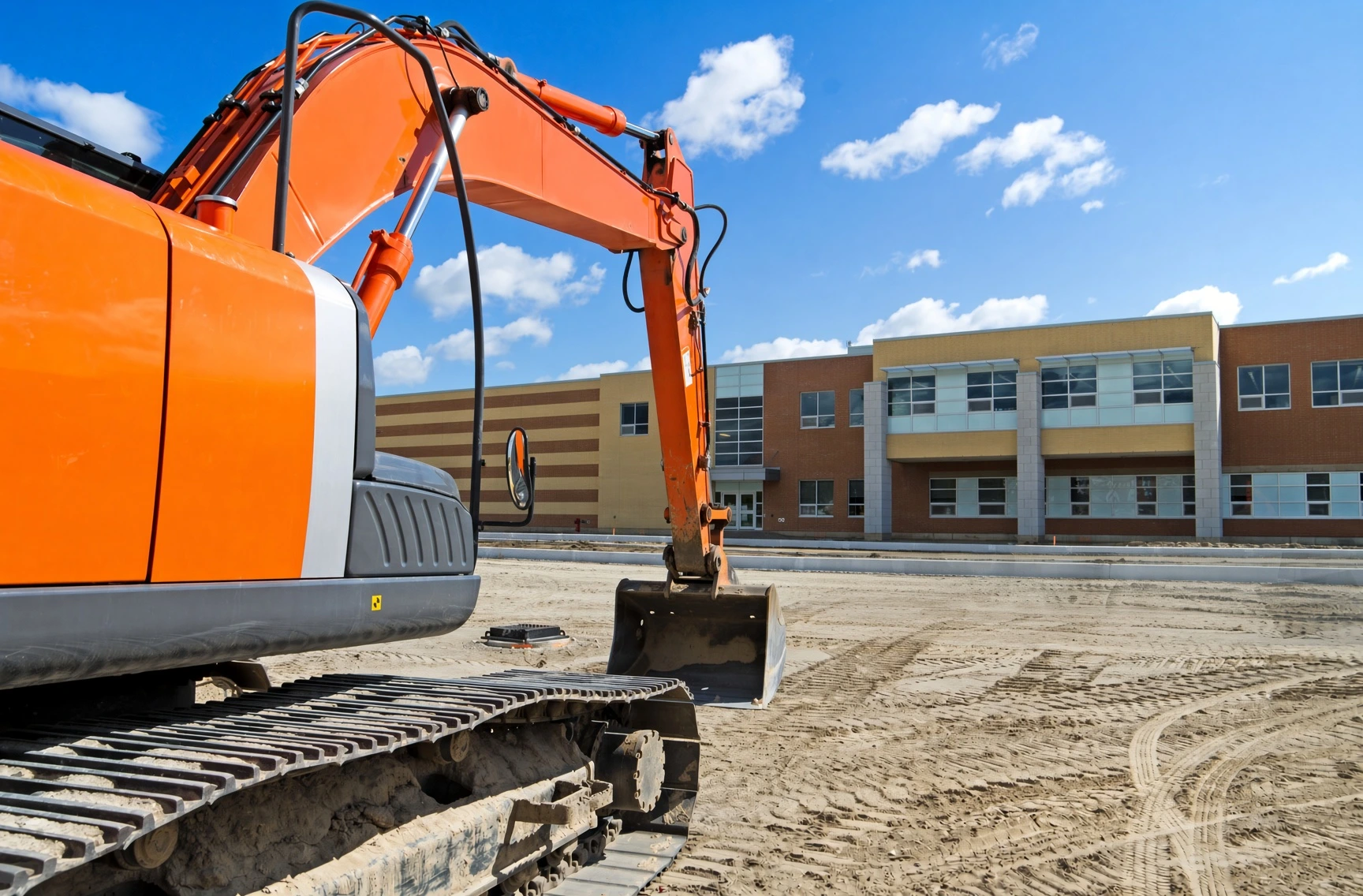
School campus parking lot paving project in Plano TX

Plano is a campus town: big churches, private schools, medical offices clustered around Medical City on 15th Street, and office parks from Plano Parkway up to Legacy. Each one has its own traffic pattern, so we schedule around it: church parking lots get paved Monday through Saturday, school lots get summer break, and office lots get nights and weekends.

Every campus client gets a written scope that spells out thickness and subgrade treatment so you can compare bids, certificates of insurance before we start, traffic control handled by us, and the option of a multi-year plan that puts sealcoating, crack sealing, and restriping on a set schedule.

  • Church, private school, retail, office & medical campus paving
  • Written specs so bids are actually comparable
  • Work scheduled around services, semesters & business hours
  • Multi-year maintenance programs with predictable budgets
🧱

Concrete Curbs, Sidewalks, ADA Ramps, Fire Lanes & Dumpster Pads
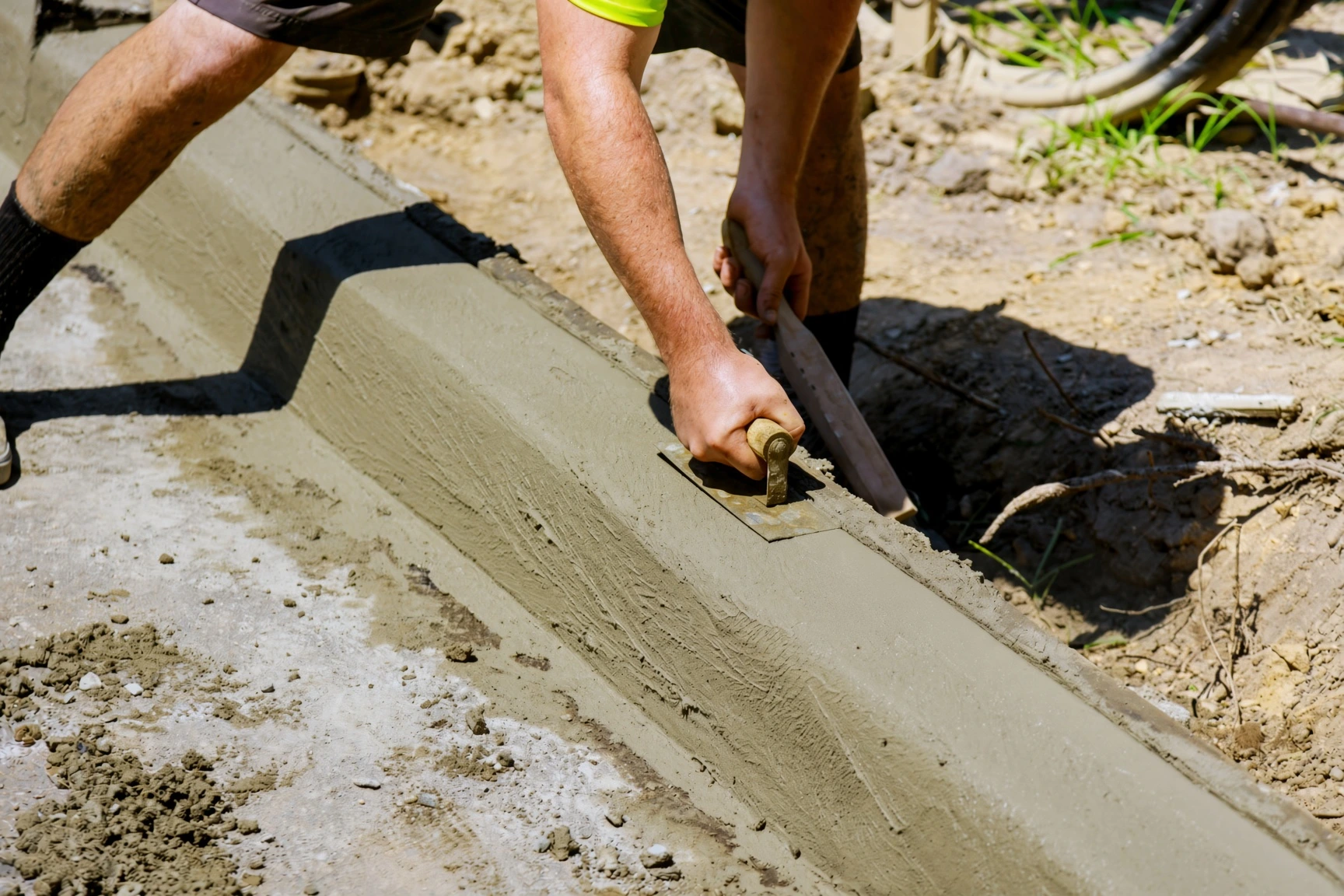
Concrete curb and ADA ramp repair at a Plano commercial property

Every parking lot has concrete around and through it, and our concrete crews handle all of it. Curbs and gutters that a delivery truck clipped or that runoff has undercut. Sidewalks with cracked, lifted sections that have become trip hazards. ADA ramps built to the correct slope with detectable warning surfaces, so they pass the same TAS review as your striping. Fire lanes, which the City of Plano requires in concrete. And dumpster pads and loading zones, which have to be concrete to withstand a garbage truck's weight.

Many concrete companies focus on patios and pool decks, and plenty of paving crews sub this commercial work out. We scope it ourselves, as part of your lot project or on its own.

  • Curb & gutter repair and replacement
  • Sidewalk repair, trip-hazard removal & new walkways
  • ADA ramps, detectable warnings & accessible routes built to TAS
  • Fire lanes, dumpster pads, loading zones & concrete parking areas
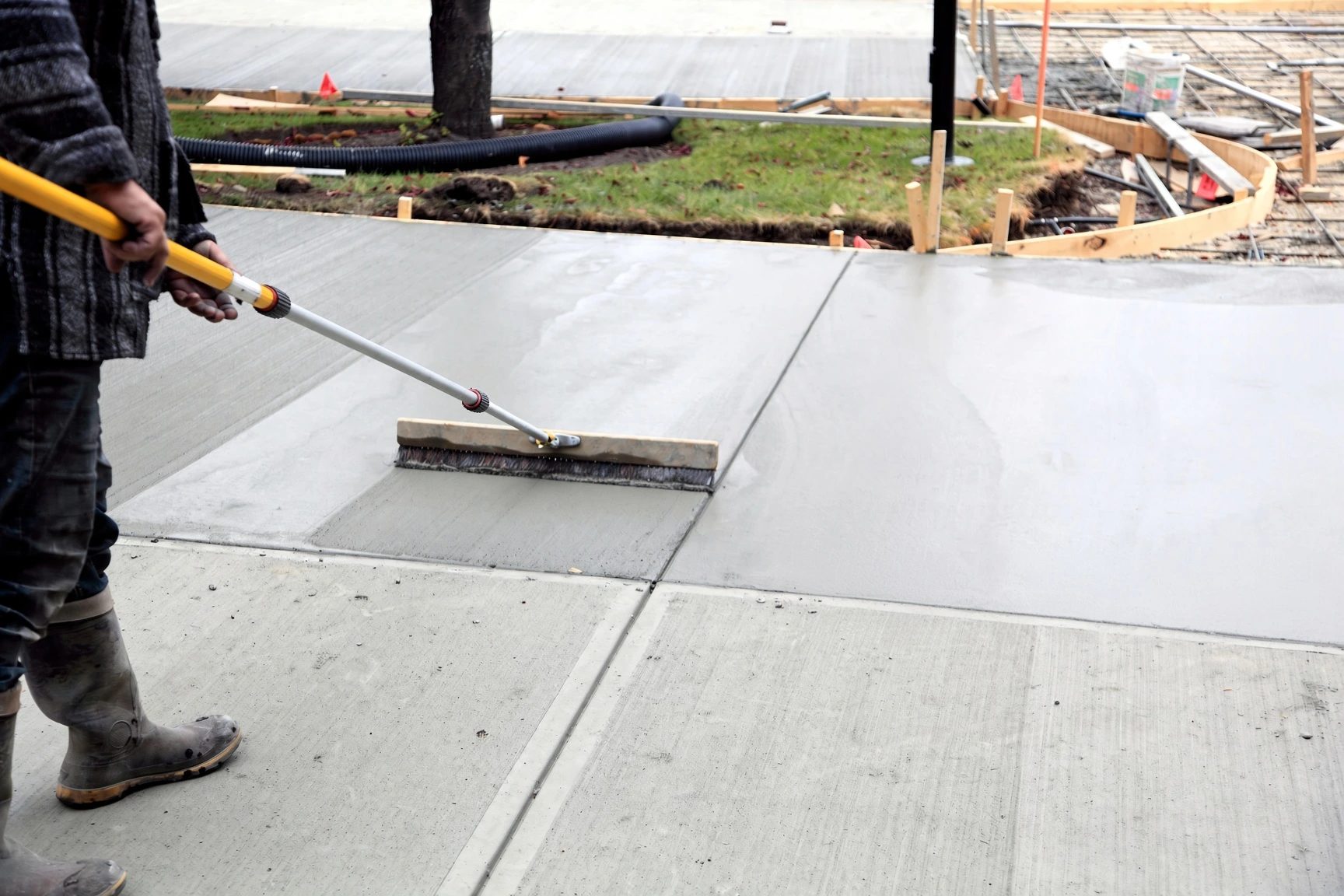
Property managers & HOA boards: we have multi-year pavement maintenance programs that include annual inspection, fall crack sealing before ice-storm season, sealcoating and restriping on a set cycle, with documentation for your files. Request a commercial bid →

For Homeowners

Driveway Paving & Concrete Driveway Contractors in Plano

From a heaved concrete panel in Los Rios to a quarter-mile lane on acreage out toward Parker, we handle every stage of residential paving, in asphalt or concrete.

🏠

Concrete Driveway Repair & Replacement

Concrete driveway panel replacement at a Plano Texas home

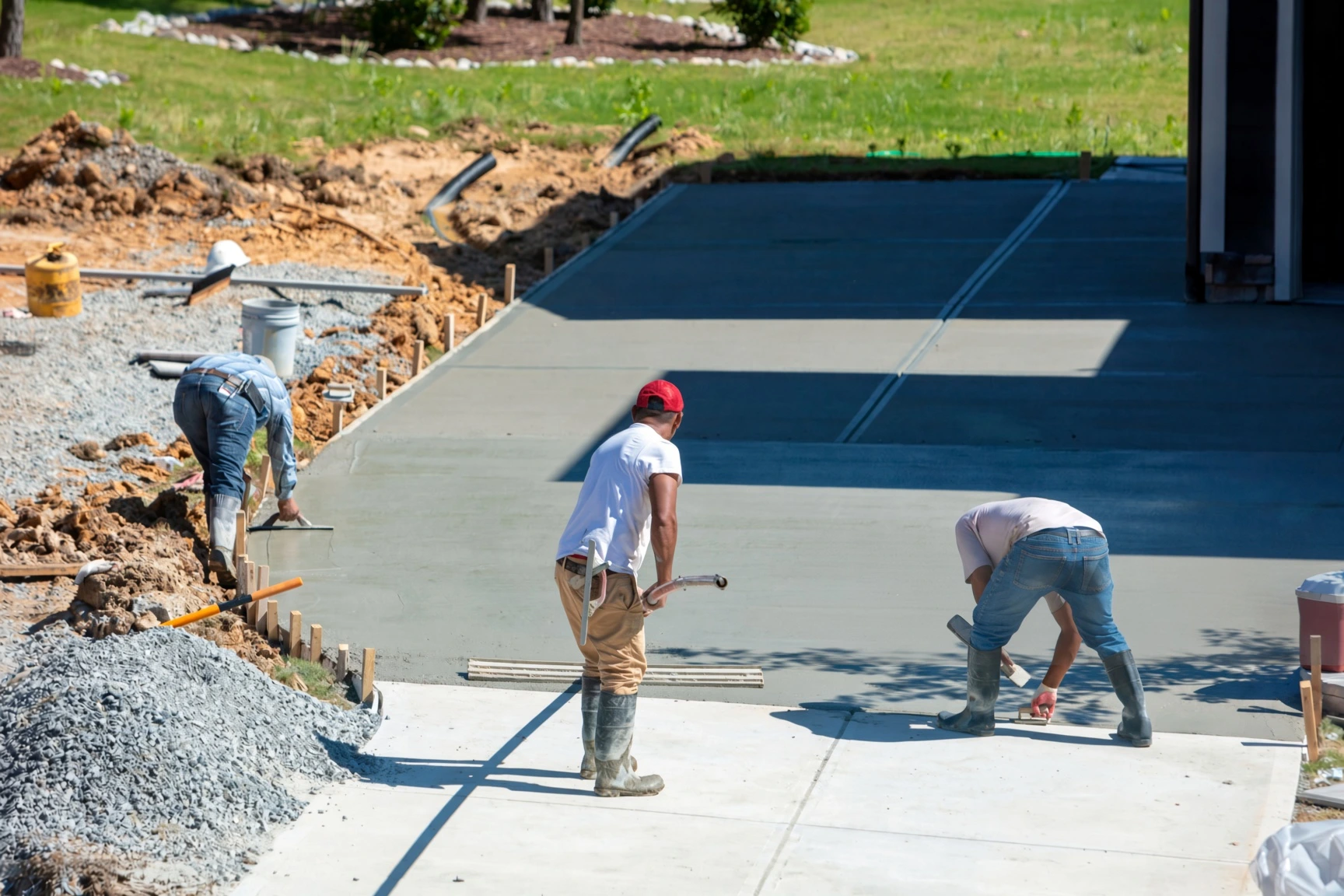
Plano is a concrete-driveway town, and Blackland clay is hard on concrete. Panels crack when the soil heaves, corners lift into trip hazards, the surface flakes after an icy winter, and the section at the street sinks where water gets under the slab. The good news is that concrete can be repaired one panel at a time. If two panels have failed and the rest are solid, we saw-cut and remove those panels, fix whatever moved underneath, and pour new ones that match your existing finish. A tree root or a plumbing trench that took out one corner shouldn't cost you a whole new driveway.

When the whole driveway is cracked, patched, or being reshaped in a remodel, full replacement is the better call. We tear out the old slab, treat and compact the clay underneath, and pour new concrete with joints placed to control where it cracks. Repairs between your garage and the sidewalk are on your property and don't need a permit, but the approach, the short section between the sidewalk and the street, is city right-of-way, and replacing it requires a City of Plano permit. We handle that paperwork when the job reaches the street.

If you're considering concrete driveway resurfacing, we usually recommend against it because it tends to peel within a few years on Plano's clay. While replacing the failed panels costs more upfront, it will last decades.

  • Panel replacement that matches your existing finish, so you pay for what failed, not the whole drive
  • Full tear-out & repour over treated, compacted subgrade
  • Trip hazards, spalling, sunken approaches & root damage fixed
  • City of Plano permit handled when the work reaches the street
🛣

Asphalt Driveway Paving & Resurfacing Driveway

Long asphalt private lane paved on acreage near Plano TX

Asphalt earns its place around Plano on long driveways and private lanes on the acreage east and north of town including Parker, Lucas, Fairview, Murphy. In these cases, pouring 400 feet of concrete would break any budget. Asphalt is half the installed cost, drivable in days, and more usable than gravel.

Every asphalt drive we build in Plano gets 2.5–3 inches of compacted hot mix over 6–8 inches of compacted base — this is deeper than most because of our expansive clay. We also make sure the subgrade is lime-treated or moisture-conditioned where the soil calls for it, and everything sloped so water sheds away from the garage and the foundation. Those numbers go on your written quote.

If your existing driveway is worn but the base underneath is still solid, resurfacing renews it for about half the cost of a new driveway and lasts 10–15 years. We check the base first to make sure it's still healthy.

  • New asphalt driveways, replacements & gravel-lane conversions
  • Fresh hot mix from local DFW plants, we never use "leftover" material that can fail early
  • 6–8" compacted base sized for Blackland clay
  • Free estimate with exact thicknesses in writing

Driveway Extensions, Widenings & Parking Pads

Concrete driveway widening and parking pad added in Plano

This is a popular request once teenagers start driving, the boat needs a home, or your guests keep parking in the yard. We add driveway widenings, turnarounds, parking pads, and basketball aprons in concrete or asphalt. We take care to prep the base under the new section and a clean saw-cut tie-in to the existing drive, sealed so water can't work into the seam.

Fair warning: new concrete pours brighter than a weathered drive, and new asphalt is jet black next to gray. The contrast fades substantially within a year, and on asphalt we can do a whole-drive sealcoat that unifies the color.

  • Driveway widenings, turnarounds, RV & boat pads, sport aprons
  • Proper base under every new section, no shortcuts on additions
  • Clean saw-cut joints, tied in and sealed
☀️

Driveway Sealcoating

Sealcoating being applied to an asphalt driveway in Plano TX

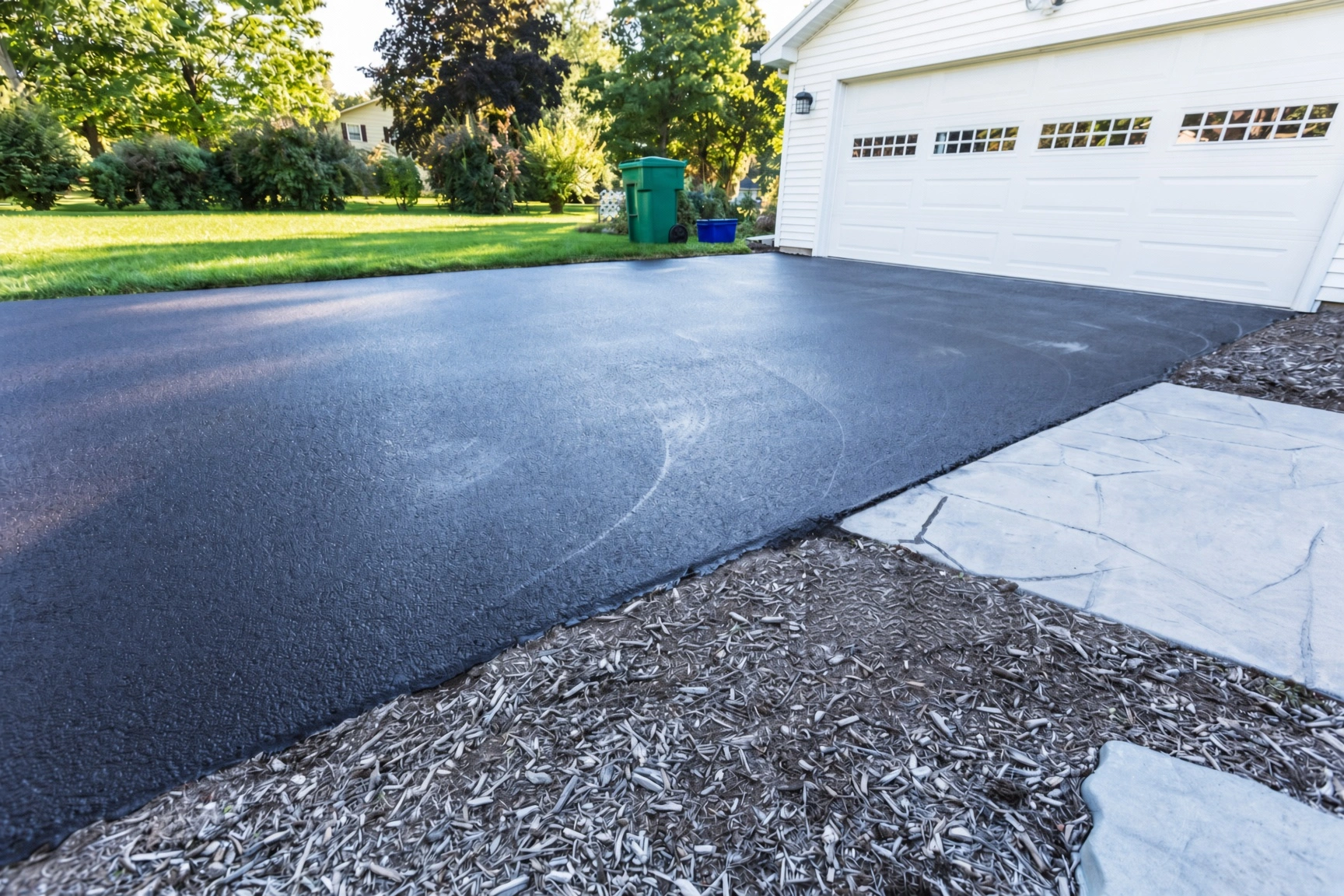
If you own one of Plano's asphalt drives or a private lane, you'll see that our sun's UV bleaches asphalt gray and brittle over time. Sealcoating every 2–3 years blocks this, helps your driveway shed water before it reaches the clay, and brings back the deep black that makes a drive look new from the curb. We hot-fill cracks first, then apply commercial-grade sealer over a cleaned surface. All in, this costs a few hundred dollars and protects a surface that costs multiple thousands to replace.

Timing note: new asphalt needs 6–12 months to cure before its first coat. If we seal it too soon, we trap the oils which keeps the surface soft. Our sealing season runs most of the year, sealer needs a day above 50°F and a dry day or two to cure.

  • Commercial-grade sealer at full concentration
  • Crack filling & oil-spot priming included
  • Sealcoat 2–3 years given the Texas sun
🔧

Asphalt Repair & Pothole Patching

Full-depth hot mix pothole repair on a Plano driveway

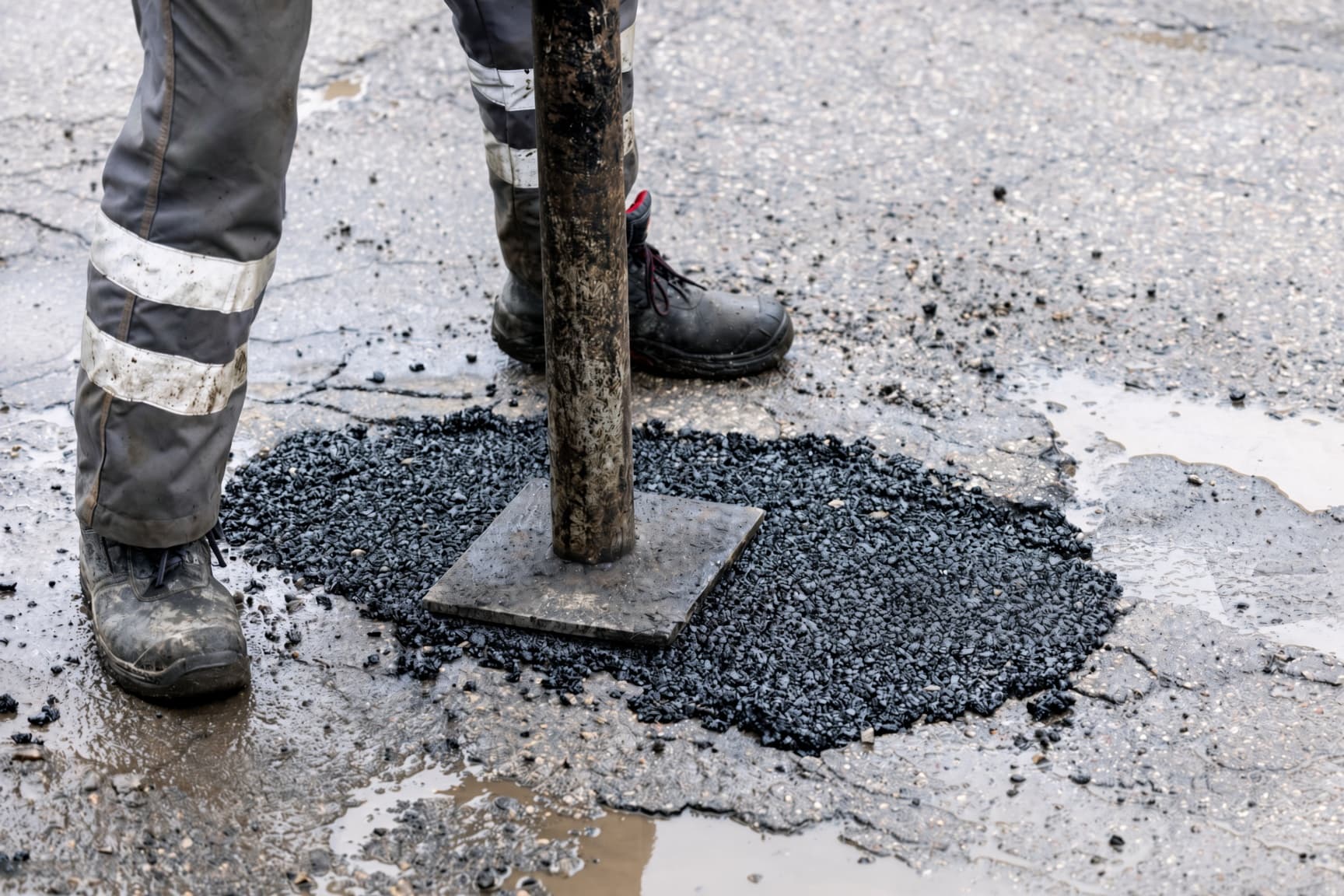
A pothole, a sunken spot, a crumbling edge, or a patch of alligator cracking doesn't mean the whole driveway is done. It usually means water got into the clay under that one area and the base gave way. A proper repair cuts out the damaged section, fixes the drainage problem that caused it, rebuilds the base, and fills the hole with fresh hot mix asphalt rolled level with the surface around it.

That's the opposite of cold patch, the bagged asphalt sold at hardware stores. Cold patch never bonds to the old pavement, so the first ice storm pushes it back out and the same pothole is back by March. We do full-depth hot mix repairs that stay put, on driveways, private lanes, and parking lots.

  • Pothole repair & patching, full-depth, not skimmed over
  • Sunken spots releveled, crumbling edges rebuilt
  • Alligator cracking cut out & the base underneath corrected
🪨

Chip Seal Driveways (Tar & Chip)

Chip seal ranch lane paved on acreage in east Collin County

Chip seal, also called tar and chip, is the middle option between gravel and full asphalt. For this, we spray hot liquid asphalt over a prepared base, spread crushed stone on top, and roll it in tight. The result is a solid, dust-free surface that doesn't wash out in a spring storm, with a natural stone look that fits the horse properties around Parker and Lucas.

It costs roughly 30–40% less than hot mix asphalt, which is why it's often the right answer for an 800-foot lane where full asphalt gets very costly. The trade-off is a shorter life per layer: plan on a fresh spray-and-chip layer every 7–10 years, sooner on a lane that sees trucks or trailers.

  • Chip seal lanes cost roughly 30–40% less than asphalt
  • Ideal for long rural drives, farm lanes & shared private lanes
  • Never needs sealcoating; a new chip layer every 7–10 years instead
Tradeoff comparison

DIY Driveway Repair vs. Hiring a Paving Contractor

Walk into any hardware store on Coit or Custer and you'll find concrete crack caulk, patching compound, driveway sealer, and cold patch. For a hairline crack, DIY has its place. But retail products are diluted versions of what we use, and Plano's climate exposes weak work fast.

DIY Driveway Repair

  • Concrete caulk and patch compound seal the crack but not the moving clay under it, so the crack reopens next season
  • Foam lifting kits and resurfacers can't fix a slab that sank because of drainage; the water is still under there
  • Retail asphalt sealer is diluted for easy pouring; Texas UV wears through it in about a year
  • Cold patch ($15–$25 a bag) never bonds to the old asphalt; the first ice storm pops it out
  • No warranty, and a botched coat has to wear off before it can be redone right

Professional Driveway Repair

  • We replace concrete panels and correct the subgrade, so the repair matches and stays put
  • We fix sunken approaches at the cause: drainage first, then the slab
  • Sealcoating at $0.15–$0.35+/sq ft with commercial-grade sealer at full strength keeps your asphalt healthy for longer
  • We use hot rubberized crack sealant and full-depth hot mix patches that survive the freeze
  • Written workmanship warranty from a local crew

Where DIY makes sense: a couple of hairline cracks on a young surface, or a temporary cold patch to get a pothole through to your next paving visit. Where it doesn't: anything that's cracking or sinking because of the ground underneath, whole-surface sealcoating, concrete panel work, and any actual paving, which takes a paver, rollers, and material delivered at 300°F. Not sure which side your project falls on? A free estimate costs nothing. Call (972) 600-2649.

Budgeting Your Project

Asphalt Paving & Concrete Driveway Cost in Plano

Cost to install an asphalt driveway is ~$4–$7+ per square foot; a concrete driveway replacement costs ~$7–$13+ per square foot. Parking lot paving typically costs $3.50–$7 per square foot and resurfacing about half that, and sealcoating is a few hundred dollars every few years.

Plano Paving Prices by Service
Service Typical Installed Cost* Typical Project Total Expected Lifespan Best For
Parking Lot Paving $3.50–$7/sq ft Scoped per site; square footage, thickness, subgrade treatment & striping drive it 20–30 years when maintained New commercial construction & full rebuilds
Parking Lot Resurfacing (Mill & Overlay) $1.75–$4/sq ft Scoped per site 12–20 years Renewing structurally sound '80s–'90s lots
Sealcoating $0.15–$0.35/sq ft $150–$500 typical driveway; lots scoped per site Reapply every 2–3 years Blocking Texas UV, the #1 asphalt killer here
Crack Sealing $1–$3/linear ft $200–$700 typical 3–5 years per application Closing water entry points before winter
Asphalt Repair / Pothole Patching $3–$6/sq ft of repair $350–$1,500 typical Matches surrounding pavement Potholes, edge failures & localized damage
Parking Lot Striping $4–$7 per stall; ADA & stencils quoted $450–$2,500 typical lot Refresh every 2–3 years Compliance, safety & curb appeal
Concrete Driveway (Replacement) $7–$13/sq ft $5,000–$10,000 typical two-car drive 30–40 years Full repours & new construction
Concrete Panel Repair Quoted per panel $1,200–$3,500 typical for 1–3 panels Matches surrounding slab Heaved, cracked or sunken sections; pay only for what failed
Curb, Sidewalk & ADA Ramp Repair Quoted per section $600–$3,500 typical scope Matches surrounding concrete Trip hazards, damaged curbs & TAS/ADA compliance
Asphalt Driveway / Private Lane $4–$7/sq ft $2,500–$6,500 typical two-car; lanes priced by footage 20–30 years when maintained Long drives, acreage lanes & budget repaves
Asphalt Driveway Resurfacing (Overlay) $2.50–$4.50/sq ft $1,800–$4,500 typical 10–15 years Worn asphalt over a still-solid base
Chip Seal Driveway (Tar & Chip) $2–$5/sq ft $2,500–$7,000 typical rural lane 7–10 years per wear layer Ranch lanes in Parker, Lucas & Fairview

*Typical ranges for Plano, TX. Where your project lands depends on square footage (bigger jobs cost less per foot), how much subgrade treatment our Blackland clay demands, drainage work, current asphalt and cement prices (both track oil and energy), and distance from the plant. Hot mix has a working-time clock from the moment it's loaded.

Two insider tips on pricing. First, beware of quotes dramatically below these ranges: every summer, traveling crews work Plano communities claiming "leftover asphalt" from a job nearby, offering to pave your driveway that day for cash. What you get is a thin layer over an unprepared base that breaks apart by spring. Second, the most affordable long-term path is almost never the cheapest quote: it's proper subgrade work plus maintenance every few years. Best way to get an accurate number for your property is a free estimate, call us at (972) 600-2649.

Compare Bids Like a Pro

How to Compare Paving Contractor Quotes: 6 Things Every Bid Should Include

Most paving quotes are one line and a price. That's how two bids end up $3,000 apart with no way to tell why. Here are the six things that should be in writing on every quote, so you can spot corner-cutting before it's under your tires.

1. Fresh Hot Mix Asphalt, Ordered for Your Job

Hot mix asphalt is crushed stone and sand bound together with asphalt cement, mixed at a plant at around 300°F and laid while it's still hot. Once a load cools, it can't be reheated, so paving is scheduled around plant hours and the drive from the nearest DFW plant. That's also why "we have leftover hot asphalt from a job down the road" is a scam. A real quote names fresh mix ordered for your job, giving you results that last.

2. Subgrade Treatment for Blackland Clay

The layer that decides your pavement's lifespan is the one you never see: the clay underneath. Blackland clay swells when wet and shrinks when dry, and pavement over untreated clay cracks no matter how thick it is. The fix is lime treatment (mixing lime into the top few inches of clay so it stops moving) or, on smaller jobs, moisture conditioning and compaction. When two bids are thousands of dollars apart, this line is usually why. Ask every bidder how they'll treat the subgrade and what happens if they hit soft spots.

3. Compacted Asphalt Thickness

For a Plano driveway, we do 2.5–3 inches of compacted asphalt, or a 4-inch concrete slab (5 inches where trucks park). Commercial drive lanes need 3–4 inches of asphalt, usually in two layers. The word to look for is compacted. Asphalt squeezes down about 25% under the roller, so "3 inches" laid loose finishes closer to 2.25. Our quotes state the compacted number instead of the inflated number.

4. Parking Lot Drainage

Plano is flat, and flat lots pond. Standing water soaks the clay, the clay moves, and the pavement fails right where the puddle sat, then freezes into a slip hazard in February. Every quote should include a drainage plan so your parking lot doesn't fail early. We grade a deliberate slope of about a quarter inch per foot, and where the site won't cooperate we add area drains, curb cuts, or regrading.

5. Compaction Equipment and Method

The difference between a good-looking surface and a durable one is a roller. Packing down the subgrade, the base, and the hot asphalt while it's still hot is what gives pavement its strength. Skip it and the surface stays porous, soaks up water, and crumbles within a few seasons. Two questions for any bidder: do you compact the base in layers, and what roller are you bringing? A crew with a truck and rakes can't compact anything.

6. How to Choose a Paving Contractor in Plano

Texas doesn't license paving contractors at any project size, so the vetting is on you. Look for a certificate of insurance handed over before work starts, local references you can drive past, and a warranty in writing. For commercial work, add TAS/ADA fluency, including the TDLR review that kicks in at $50,000. We provide all of this before we start, and we've been proudly serving Plano for 22 years.

Compare Your Options

Asphalt vs. Concrete vs. Chip Seal Driveways

No single surface wins everywhere. Here's how the options stack up against Plano's expansive clay, 100-degree summers, and occasional ice.

Pavement Surface Options in Plano
Surface Installed Cost Lifespan Here Clay & Texas-Heat Performance Maintenance Best For
Asphalt $3.50–$7/sq ft 20–30 years maintained Very good: flexes with clay movement; manage UV damage with sealcoat; repairs are simple and cheap Sealcoat every 2–3 years, seal cracks each Fall Parking lots, private streets, long lanes & budget drives
Concrete $7–$13/sq ft 30–40 years with joint care Good when subgrade is treated: rigid slabs crack where clay heaves; repairs cost more and rarely match, but it's not damaged by UV Low routine; joint sealing recommended Most Plano driveways; fire lanes, dumpster pads & loading zones
Chip Seal (Tar & Chip) $2–$5/sq ft 7–10 years per wear layer Very good: flexible like asphalt, no sealcoating needed, handles heat well New chip layer every 7–10 years Ranch & acreage lanes in Parker, Lucas, Fairview
Gravel $1–$3/sq ft Ongoing Poor: spring gully-washers wash it out, ruts in wet clay, dust in drought Annual re-grading & fresh stone, forever A phase-one surface before paving
Concrete Pavers $12–$30/sq ft 25–50 years Good: individual units tolerate movement, but base prep is everything on our clay Joint sand refresh, occasional releveling Courtyards & accents more than full drives

What we see across Plano: concrete for the front-of-house driveway, asphalt for anything measured in acres or hundreds of feet, chip seal where the pavement meets pasture. For deeper trade-offs, see our materials FAQs below.

Know What You're Looking At

Signs Your Driveway or Parking Lot Needs Repair

Some pavement problems are cosmetic. Others mean the clay underneath is moving and the clock is running. Here's how to tell the difference before you call anyone.

Cracks in Asphalt or Concrete Wider Than a Quarter

Hairline cracks are normal and cheap to seal, but once a crack is wide enough to swallow a quarter, rain reaches the clay underneath, and our wet Blackland clay will move. This is the stage where crack sealing at a couple of dollars a foot saves hundreds later, especially if it's done before Winter.

Alligator Cracking in Asphalt

If you see a web of interconnected cracks, like reptile skin, that's no longer a surface problem. It means the base under that spot has failed, usually because water got into the clay. Sealcoating over it hides it for a season, but doesn't fix the problem. The question now is how far it spreads: one patch calls for a full-depth repair, cracking across the whole surface calls for resurfacing or replacement. Our repair-vs-replace comparison walks through that decision. Or call us to take a look for free.

Standing Water on Your Driveway or Parking Lot

Plano rain comes in gully-washers, and on our flat lots, a puddle that's still there an hour after the storm means the grade is wrong. Standing water soaks the clay under that spot, the clay moves, and a pothole or heave forms exactly where the puddle sat. In winter, that same puddle freezes into the slip-and-fall claim on your parking lot.

Asphalt Fading Gray and Getting Rough

Fresh asphalt is deep black. Our Texas sun bleaches it gray, dry, and porous over time. Gray by itself isn't an urgent problem, but it does mean the surface is now absorbing rain instead of shedding it. That's your sign that sealcoating is overdue, and waiting longer creates more expensive repair or replacement problems down the road.

Concrete Driveway Sinking, Heaving or Spalling

On concrete, trouble shows up as a panel corner lifting into a trip hazard, a slab tilting where a root or wet clay pushed it up, a section sinking where it meets the street, or a surface flaking (spalling) after an icy winter. One or two bad panels can be replaced on their own and matched to the rest. Panels failing across the whole driveway usually mean the clay underneath was never treated, and the fix is a full replacement over properly treated subgrade so it doesn't happen again.

Potholes After a Winter Freeze

A pothole is what a crack becomes when it goes into winter unsealed: water fills it, ice expands it, traffic breaks it out. One or two isolated potholes can be patched for good with full-depth hot mix. Potholes scattered across the surface usually mean the base is failing, which likely requires resurfacing to fix. Call us and we can take a look for free.

Assess like a pro

Driveway & Parking Lot Repair vs. Resurfacing vs. Replacement

When Repair Is Enough

The problems are isolated: a few straight cracks, one pothole where water collects, a crumbling edge, or one or two heaved concrete panels. If less than 20% of the surface has issues and nothing feels soft underfoot, targeted crack sealing, patching, or panel replacement plus a sealcoat (if asphalt) buys you years for hundreds of dollars instead of thousands. Most Plano pavement under 15 years old is in this category.

When to Resurface Asphalt

The surface is worn everywhere but the structure underneath is still firm and water drains properly. A mill-and-overlay resets the clock for 10–15 years on a driveway and 12–20 on a parking lot, at roughly half the cost of replacement. The simple test: scattered line cracks mean resurfacing is on the table; interconnected alligator cracking means the failure is underneath, and needs replacement to fix.

When to Replace a Driveway or Parking Lot

Alligator cracking across large areas, ruts in the wheel paths, spots that flex when you drive over them, standing water that comes back no matter what, or concrete that's more patch than panel. At that point, money spent on the surface is wasted. The fix is to tear out, treat the clay that killed the first pavement, rebuild the base, and pave new. It costs more once, but it's built to last decades instead of seasons.

We Can Pave in Phases

If the full job doesn't fit this year's budget, we can split it, starting where things are actively getting worse: anywhere water stands, and anywhere heavy vehicles sit. A parking lot can rebuild its failing drive lanes this year and resurface the stalls next. An HOA can spread streets across budget years. A homeowner can replace two heaved panels now and the rest at resale. Staged right, nothing you pay for in phase one is wasted in phase two, and we'll tell you which order makes sense at your free estimate.

Our commitment: we quote the cheapest option that will actually solve your problem, and when it's a toss-up, we price both and explain the trade-off. Already have a quote from someone else? Bring it to your free estimate. We read other companies' bids all the time, and we'll tell you if theirs is fair.

What to Expect

How Our Paving Process Works

Most driveways finish in 1–2 days once site work is done; parking lots typically run 2–7 days and can be phased in sections so you stay open.

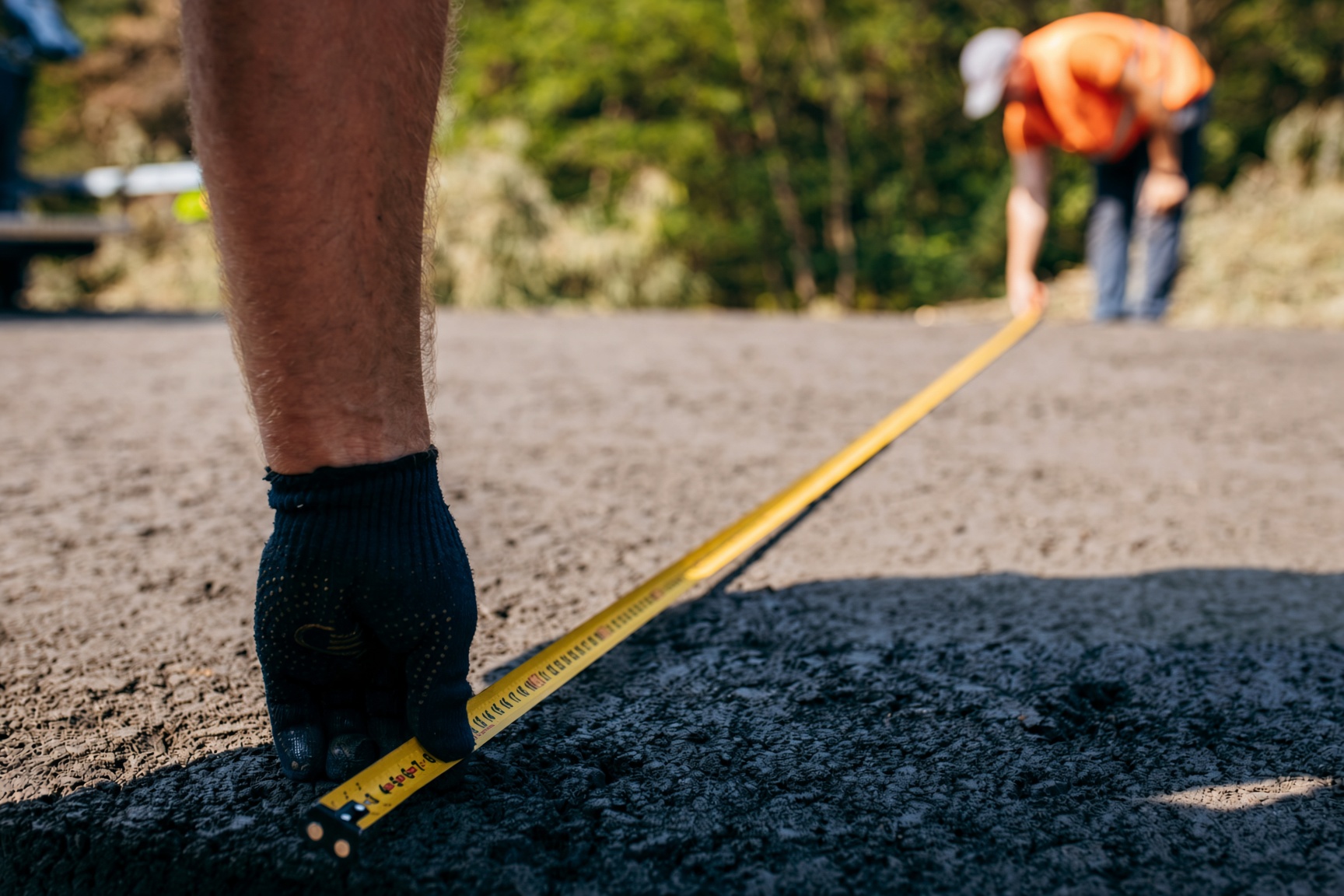
Estimator measuring a commercial parking lot for paving in Plano TX

Free On-Site Estimate

We walk your lot or driveway with you, measure, check the soil and where the water goes, and talk through what you want. You get a written quote with subgrade treatment, base depth, and compacted thickness spelled out. These details make bids comparable, so you know exactly what you're buying.

Lime-stabilized subgrade being compacted before paving in Plano

Treat the Clay, Build the Base

First we grade the site so water runs off instead of pooling. Then we treat the Blackland clay with lime or moisture-condition it so it stops swelling and shrinking. Finally we build the crushed stone base in layers, compacting each one. Nobody sees this stage once the pavement goes down, but it gets you a longer lifespan. It's also the part a cheap bid quietly skips.

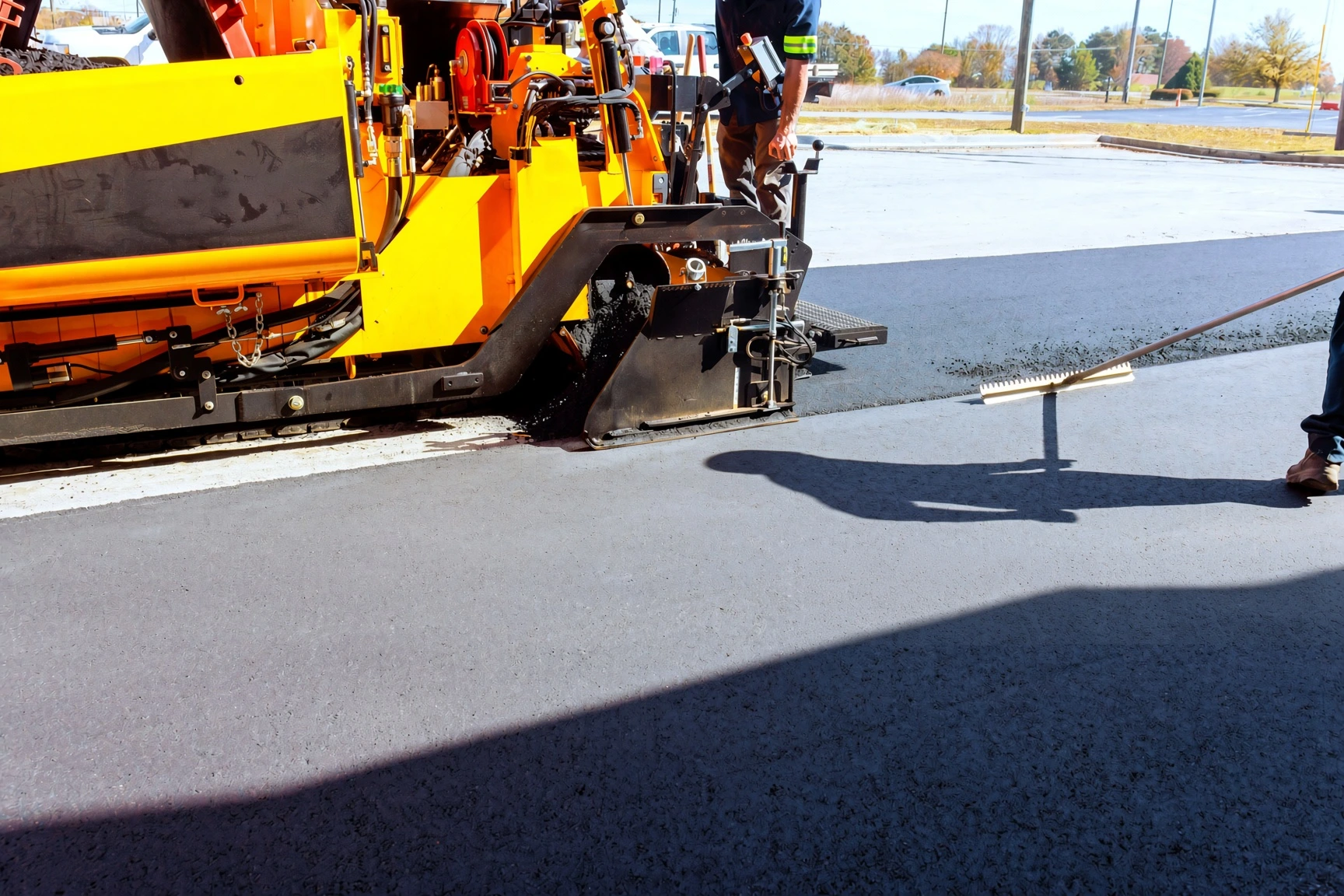
Hot mix asphalt being laid and rolled on a Plano parking lot

Paving Day: Lay It Hot, Roll It Tight

For asphalt, fresh hot mix arrives from the plant and we work fast while it's still hot: spread it evenly, rake the edges clean, and roll it tight before it cools. For concrete, we pour, finish, and cut the control joints where the clay is most likely to crack the slab. On parking lots we work in sections, so part of your lot stays open the whole time.

Final walkthrough of a completed paving project in Plano Texas

Final Walkthrough & Care Instructions

We walk the finished pavement with you and leave simple care instructions: best to stay off new asphalt 24–72 hours, plan the first sealcoat at 6–12 months and give new concrete its week to cure. Your written 1-year warranty and any documentation your files need are shared before our trucks pull out.

Who We Are

Paving Company Serving Plano for 20+ Years

Local, Insured Asphalt & Concrete Paving Crews

Hi, I'm Peter. I grew up in East Plano watching my dad's driveway crack a little more every summer, so it's a bit poetic to have spent the past 22 years fixing this across Plano. Today, our crews build and maintain parking lots, HOA streets, and driveways across Collin County in both asphalt and concrete. We're fully insured, our warranty is in writing, and we're a local company, so we're still here years later if you ever need us.

Built for Blackland Clay and Texas Heat

Paving here has its quirks. Our clay swells and shrinks with the seasons, the sun bakes asphalt gray in a few summers, spring storms drop inches of rain in an hour, and every few winters an ice storm finds every crack we didn't seal. In the older neighborhoods east of Custer, we've seen oak trees lift driveways from below. We've worked in these conditions for two decades, so everything we build, from how deep the base goes to where the water drains, is planned around them, whether it's a retail lot off Parker Road or a lane on acreage out toward Lucas.

Fair Upfront Prices

When we hand you an estimate, you'll know exactly what you're paying for: how we'll treat the ground, how many inches of base and pavement you're getting, what drainage work is included, and what isn't. And if a repair will fix the problem, we'll tell you that and quote the smaller job. We're going to be driving past your driveway or lot for years, and it's a lot easier to do that when you're glad we came by.

✓ Free Estimates   ✓ Fully Insured   ✓ 1-Year Written Warranty

Plano TX paving company crew finishing a commercial parking lot

What Plano Property Owners Say

★★★★★

"Two panels of our driveway kept cracking along the same line every year. Peter came out and figured it was the clay, not the concrete. His team replaced the panels, fixed the base underneath, and it's been solid for three years and counting! No surprises on the final bill either."

— Raymond O., West Plano
★★★★★

"Peter's crew resurfaced and restriped our subdivision's private road in phases, so nobody lost access for more than an afternoon. They fixed the pothole at the entrance too, and it actually drains now. Great experience and a fair price."

— HOA board president, Lucas
★★★★★

"We manage a strip center and needed the lot sealcoated and restriped without closing on our tenants. Peter's crew did it over two nights, and our accessible spaces are finally laid out right. We appreciate the fast turnaround and the attention to detail!"

— Property manager, retail center in East Plano

Plano's Trusted Paving & Pavement Contractors

Free estimates from a local asphalt and concrete crew, backed by written warranty.

Areas We Serve

Paving Contractors Near Plano, TX

We pave and maintain asphalt and concrete throughout Plano and the surrounding Collin County communities. Don't see your area listed? Give us a call, we can probably cover you.

Plano Neighborhoods We Serve

West Plano East Plano Central Plano Willow Bend Kings Ridge Deerfield Whiffletree Lakeside on Preston Avignon Windhaven Ridgeview Ranch Los Rios Hunters Glen Russell Creek Pecan Hollow

Commercial Corridors We Serve

Legacy West Legacy Business Park Historic Downtown Plano Preston Road Corridor Plano Parkway K Avenue Corridor Coit & Spring Creek Parker & Custer Medical District / 15th St

Nearby Cities & Towns We Serve

Frisco Allen McKinney Richardson Garland Carrollton The Colony Lewisville Prosper Murphy Wylie Fairview Lucas Parker Addison Little Elm
FAQ

Paving FAQs for Plano Homeowners & Businesses

Common questions we get asked, organized by topic.

Cost & Choosing a Paving Contractor in Plano

How much do paving contractors charge in Plano, TX?

Paving usually costs $4–$7 per square foot for an asphalt driveway, $7–$13 / sq ft for a concrete driveway, and $3.50–$7 / sq ft for a parking lot. Maintenance and repair cost much less: asphalt sealcoating costs $0.15–$0.35/ sq ft, crack sealing $1–$3 per linear foot, pothole patching $3–$6 / sq ft of repair, and parking lot striping is ~$4–$7 per stall. Concrete panel replacement usually costs $1,200-$3,500+ for one to three panels.

What explains the ranges: bigger jobs cost less per foot, level of subgrade treatment the clay underneath needs, and drainage work. Full paving cost estimates in table above.

We've been paving across Plano, TX for 22 years, and our quotes tell you exactly what you're buying: subgrade treatment, compacted thickness in inches, drainage, and what's excluded, so you can compare bids on the same terms. If a repair will fix your problem, we quote the smaller job so you don't overpay. Estimates are always free, call (972) 600-2649 for yours.

How do I choose a paving contractor in Plano?

Ask for five things: a certificate of insurance before the job starts, a written scope that states subgrade treatment and compacted thickness in inches, a drainage plan, local references you can drive past, and a warranty in writing. For parking lots, add a sixth: working knowledge of TAS/ADA accessibility requirements. Compare bids on those specs so you know exactly what you're buying. Our six things every paving bid should include walks through each one in more detail.

This matters more in Texas than most places, because the state doesn't license paving or general contractors at any project size. Only trades like electrical, plumbing, and HVAC are licensed, so anyone with a truck can legally call themselves a paving contractor. For our part, we're a family-owned company that's been paving Plano for 22 years, every job comes with a 1-year written warranty, and our references are people you might already know. We take great pride in getting you lasting results.

How much does it cost to pave a parking lot in Plano, TX?

New parking lot construction costs $3.50–$7 per square foot, which works out to ~$1,500–$3,500 per parking space including striping and ADA/TAS-compliant accessible spaces. Resurfacing an existing lot (mill and overlay) runs $1.75–$4 / sq ft. Four factors shift the number: lot size (bigger lots cost less per foot), thickness (drive lanes and dumpster approaches need more than stalls), how much subgrade treatment your clay demands, and the finish package: striping, signage, wheel stops.

Our quotes include all details in writing: subgrade treatment, thickness specs, drainage plan, striping layout, and phased scheduling so your lot can stay open. You can get an exact number with a free site walk: (972) 600-2649.

How much does a concrete driveway cost in Plano?

Full concrete driveway replacement runs $7–$13 per square foot, or $5,000–$10,000 for a typical two-car driveway, including tear-out, subgrade preparation, and a new slab with properly laid-out joints. Before you pay for full replacement, though, we can assess your panels: if only two or three have cracked or heaved, panel replacement is more affordable at $1200-$3500 for 1-3 panels, and we can match it to your existing finish.

How much does an asphalt driveway or private lane cost?

New asphalt runs $4–$7 per square foot, with a two-car drive usually costing $2,500–$6,500. Long acreage lanes get cheaper per foot as they get longer, which is why acreage properties in Parker, Lucas, and Fairview choose asphalt over concrete. If even that stretches the budget, chip seal driveway covers the same lane for 30–40% less than hot mix asphalt, at $2–$5 per square foot.

Why are paving quotes so different from each other?

Two bids can differ by thousands of dollars when one includes lime-treated subgrade, 6" of compacted base, and 3" of compacted asphalt, while the other is 1.5" raked over whatever's there now. Both look similar the week they're finished, but only one lasts decades over Plano's clay base. We recommend asking every bidder to state in writing: how the subgrade is treated, inches of compacted base, inches of compacted surface (asphalt compresses ~25% under the roller), what drainage work is included, and how soft spots are handled. Once specs match, the prices get a lot closer.

Do you offer financing for paving projects?

Yes, ask us about financing options at your free estimate. We understand a driveway replacement or parking lot project is a sizable expense, and we'd rather help you spread the cost than see you take the cheapest bid and pay for the job twice. Two other ways to make the budget work: repair instead of replace where the pavement allows it (a $1,500 panel repair often postpones a $8,000 replacement by years), and phasing, where we split the project across budget years starting with the sections that are actively getting worse. We'll walk you through all three at your free estimate.

What is the "leftover asphalt" driveway scam?

Every summer, traveling crews work Plano door to door with the same story: they just finished a job "down the road," have extra hot asphalt on the truck, and can pave your driveway today at a big discount. There's no such thing: hot mix has a working-time clock measured in hours, and no real contractor ends a job with truckloads to spare or prices work without measuring. What you're buying is a thin layer over an unprepared surface that breaks apart by spring, with no company left to call.

Do you provide a warranty?

Yes, every job comes with a 1-year written workmanship warranty, and it's in your contract, not a handshake. It covers the work we control: the subgrade treatment we specified, the compacted thickness we quoted, the compaction we rolled, and the drainage we graded. If any of that fails in the first year, we come back and fix it at no charge.

We can offer that because most pavement failures in Plano come from skipping the base work, and we never skip it. When the clay is treated and the water is managed, callbacks are rare. And if we ever get one, you'll have our number and a written promise to answer it.

Do I need a permit to replace my driveway in Plano?

Work within your existing driveway footprint on private property is usually straightforward, but the approach — the section where your driveway meets the street or alley — sits in City of Plano right-of-way, and replacing or modifying it typically requires a city permit and inspection. New driveway connections and widened approaches definitely do. No worries, we deal with these requirements regularly and handle the paperwork, so nothing lands on you.

Parking Lots & Commercial Pavement

How much does it cost to paint stripes in a parking lot?

Parking lot striping in Plano costs ~$4–$7 per stall, so a typical lot lands between $450 and $2,500. ADA/TAS accessible spaces, access aisles, fire lane curbs, arrows, and stencils are quoted separately because they take more paint and layout time, but we can handle all of it on a fast turnaround schedule. New layouts on fresh pavement cost a bit more than restriping over existing lines. The best deal is to buy it bundled with a sealcoat, since the lot is already cleaned and closed off, and that's how most of our commercial clients do it, but we can also do one-off parking lot striping for you.

What is the best way to stripe a parking lot?

First, start with a clean, dry surface: sweep, blow off dust, and let any sealcoat cure fully. If the parking layout is changing, measure and chalk it first so stalls come out square and the accessible spaces sit on the shortest route to the door. Use a striping machine with traffic-grade paint, not a roller and hardware-store paint, which fades fast under Texas sun. Stripe in warm, dry weather, keep traffic off for a few hours. On a Plano parking lot, the devil is in the details: fire lane markings need to follow city code and accessible spaces sized and signed to TAS. We've been doing this for 22 years, and can give you a free estimate if you'd like a professional line striper.

Can you resurface our parking lot without shutting down the business?

Yes — phasing is standard practice. We split the lot into sections so parking stays open at every stage, schedule the most disruptive work for your slow hours, and handle temporary signage and cone routing. Retail gets overnights or section rotation, churches get Monday-to-Saturday, offices get weekends. Resurfaced sections are drivable within a day or two, so a typical mid-size Plano lot finishes in under a week without a full closure.

What are the ADA requirements for my parking lot in Plano?

In Texas, two sets of rules apply: the federal ADA and the Texas Accessibility Standards (TAS), which the state enforces through TDLR. In practice they ask for the same things. You need a set number of accessible spaces based on your lot's size (one for a lot of up to 25 spaces, more as the lot grows, and at least one of them van-accessible). Those spaces have to be on the shortest route to the entrance, with a striped access aisle next to each one, a sign on a post, and a surface that slopes no more than 2% in any direction.

Any project of $50,000 or more has to be reviewed and inspected by a TDLR-registered accessibility specialist. We'll tell you upfront if your job crosses that line. The most common problems we find on parking lots in Plano are faded striping and missing signs, which are also fast and cheap to fix.

How often should a parking lot be sealcoated in Plano?

Every 2–3 years is ideal for sealcoating and restriping. Texas UV oxidizes sealer and fades striping at a similar pace, so most of our clients bundle restriping with each sealcoat, which also keeps ADA markings crisp and defensible. Regular sealing and crack maintenance can double a parking lot's service life, saving you thousands in the long-run.

Should I resurface or replace my parking lot?

Localized failures (potholes at the entrance, alligatoring where the dumpster truck sits) can be fixed through full-depth repairs in those areas. Then a resurfacing across the lot renews everything for a much lower cost than replacement. But if the base has failed, drainage never worked, or repeated resurfacing have raised the lot above its curbs, replacement is the right move. Most Plano parking lots we walk land in the middle, where a hybrid scope shines: we can rebuild the failed drive lanes full-depth, resurface the stalls, correct drainage, and restripe — phased across budget years if that helps.

Do you offer pavement maintenance plans?

Absolutely, multi-year pavement maintenance programs are a core service for our commercial, church, and HOA clients: annual inspection, crack sealing before winter, sealcoating and restriping on cycle, and early flagging of small problems while they're small-dollar. HOA boards and property managers get a predictable budget line and documentation formatted for reserve studies.

Do you repair concrete curbs, sidewalks, and ADA ramps?

Yes, our concrete crews handle the flatwork every commercial property needs at some point: curb and gutter repair, sidewalk replacement and trip-hazard removal, ADA ramps with detectable warning surfaces, and dumpster pads built in concrete. Sidewalk trip hazards in particular are worth fixing as soon as you notice them — they're a big liability, but quick and easy to fix. We can bundle this work into lot projects or handle it standalone, and on projects that cross the $50,000 TAS threshold we'll flag the TDLR review requirement before it becomes your problem.

Our gated community's streets are failing. Where do we start?

We've seen a number of private streets were built to a spec lighter than the garbage and delivery trucks they actually carry. In these cases, we assess section by section, then deliver a written scope your board can vote on (repair-only, hybrid, or full resurfacing) with phasing that keeps every driveway accessible and pricing that can spread across budget years. Most boards are relieved to learn the whole street rarely needs replacement at once.

Driveways: Concrete & Asphalt

Why is my concrete driveway cracking?

Almost always, it's the clay. The soil under Plano swells when it's wet and shrinks when it's dry, and a concrete slab can't move with it, so it cracks where the stress builds up: at a corner, at the street, or over an old plumbing trench. A dry August pulls the clay away from the slab edges; a wet spring pushes it back up.

If only a few concrete panels have cracked, we can replace just those and fix the ground under them. But if cracks are showing up across your entire driveway, the clay was likely never treated when it was poured, and a driveway replacement over properly treated subgrade is the lasting fix.

Can you replace just the damaged concrete panels instead of the whole driveway?

Usually, yes, and this is a big money-saver. If the rest of the slab is sound, we saw-cut the failed panels, correct what moved underneath, and pour back sections that match your existing broom finish. New concrete pours brighter than weathered slab at first, but the contrast fades substantially within a year. Panel replacement makes sense up to a third of the driveway. Beyond that, replacement usually wins on cost per year.

Can you resurface a concrete driveway?

You can, but in Plano we usually recommend against it. Concrete resurfacing means troweling a thin polymer overlay across the old slab to hide flaking and small cracks. It can look great for a while, but it's only as stable as the slab underneath, and on our moving clay the old cracks show through or the coating peels, often within a few years. It also does nothing for the reason the slab failed.

What works better here: for surface flaking (spalling), replace the affected panels; for cracks, replace the cracked panels and fix the ground under them; for a slab that's sunk but not cracked, concrete leveling can be worth pricing. Panel replacement costs more than a coating upfront, but it lasts you decades.

How thick should my driveway be in Plano?

For concrete driveways, 4" of slab is the standard, 5" where trucks, RVs, or boat trailers park, laid over prepared, compacted subgrade. For asphalt driveways: 2.5–3" compacted over 6–8 inches of compacted base; our clay soil calls for deeper base. In both materials, the surface is only as good as the ground treatment under it, which is why our quotes always lead with the subgrade treatment to get you a driveway that lasts for decades.

How long before I can use my new driveway?

Asphalt driveways are walkable after 24 hours, parkable after 2–3 days. It's sooner in cool weather, later in July heat, and we advise treating it gently for its first summer (vary parking spots, board under trailer jacks, no cranking the wheel while parked on 100° afternoons). Concrete driveways: stay off it for a week while it cures, and keep heavy vehicles off for a month. We'll give you exact timing at the walkthrough based on the weather.

Can you pave over my gravel lane?

Yes, and years of driving may have compacted it into part of your base, which lowers the cost. We assess this for free: sometimes it needs fresh stone and re-compaction, sometimes regrading to fix drainage, and occasionally the "gravel" is a dusting over clay that has to be built up properly first. What we won't do is pave over a bad base because it will lead to early failure. For long lanes out toward Parker, Lucas, and Fairview, this is also where chip seal driveways can save you 30–40% on cost vs. pure asphalt paving.

Can you fix a sunken driveway?

Of course! Sunken spots and settled approaches are one of the most common driveway repairs in Plano, and the cause is almost always water working through our clay: it could be an irrigation line soaking one edge, a downspout dumping at the slab, or the approach settling where the utility trench was never compacted. To give you a lasting solution, we fix the root cause: correct the water, rebuild what's underneath, then repour the concrete section or patch the asphalt full-depth. Sometimes for a slab that's sunk but not cracked, concrete leveling (mudjacking) from a specialty leveling company can be a cheaper option, and we'll tell you when that's worth it. Since approaches sit in City of Plano right-of-way, we handle the permit paperwork for you when the fix reaches the street.

Can tree roots damage my driveway?

It can, in Plano's older neighborhoods east of Custer and around Historic Downtown, we've seen mature oaks and pecans lift both concrete panels and asphalt from below, showing first as a ridge or a long crack running parallel to the trunk. Fixes range from bridging or thickening the section, to carefully removing a minor root, to rerouting the drive a few feet. Paving over an active root doesn't work long-term, so we check for root activity at every free estimate. If you love the tree, tell us; there's usually a way to work around it.

Sealcoating & Maintenance

Is sealcoating really necessary in Plano?

More than almost anywhere. A hundred-plus days of intense UV per year oxidizes the binder, turning asphalt gray, brittle, and porous, at which point it drinks water down to the clay. Sealcoating every 2–3 years blocks the UV, sheds the water, resists oil drips, and restores the jet-black look. It's a few hundred dollars protecting a surface that costs thousands to replace, ranking it among the best money you'll spend on asphalt in Texas.

What's the right maintenance schedule for pavement in Plano?

For asphalt: seal cracks before the winter, sealcoat every 2–3 years starting 6–12 months after it's laid, and patch small damage quickly because a small patch skipped this year is often a $1,000 repair next year. For asphalt and concrete, watch for puddles that linger after a storm; standing water means the grade needs fixing before it becomes a pothole or a heaved panel.

For concrete: keep the control joints and any cracks sealed with a flexible concrete caulk so water can't get under the slab, and keep the moisture around it even: don't let a sprinkler head or a downspout soak one edge while the rest of the ground bakes dry, because that's what heaves one side of a driveway and cracks it.

You can also let us worry about the scheduling and details, call us if you're interested in being on our maintenance program!

Do oil and gas spills damage asphalt?

Yes, asphalt is petroleum-based, so gasoline and oil dissolve the binder holding it together. A slow drip in the same parking spot softens asphalt into a divot over a couple of years, Texas heat accelerates the damage. To fix this, soak up spills as promptly as you can with cat litter, wash with degreaser, and keep a sealcoat on the surface. Our quality sealer will resist petroleum far better than raw asphalt. Spots already gone soft need to be cut out and patched, and we can prime old oil stains before sealing so the sealer bonds properly.

Repair, Resurfacing & Replacement

Why do potholes show up in Plano after a winter freeze?

Water gets into the pavement through cracks that were left open. When a cold front comes through, that water freezes overnight and expands, then thaws by afternoon, and the cycle repeats for a few days. Each round pushes the crack a little wider, and once the pavement around it is loose, traffic breaks it out into a pothole. That's why Plano's potholes tend to crop up soon after a hard freeze, usually in January or February.

The fix is simple and cheap: seal cracks in the fall, before the first freeze, so there's no water in them when the cold arrives.

What is alligator cracking and can it be fixed?

Alligator cracking is a web of connected cracks that looks like reptile skin over asphalt. It means the base under that spot has given way, usually from water getting into the clay.

The fix here is full-depth repair. We cut out the failed area, fix the drainage problem that let the water in, rebuild and compact the base, and lay new hot mix asphalt. If it's affecting one spot, that's a repair. If it's spreading across the whole surface, the base is failing everywhere, and we need to consider resurfacing or replacement. Happy to talk through the options at your free estimate.

Why is my pavement sinking in one spot?

Something under that spot gave way. The usual causes are a utility trench that was never compacted, buried construction debris that finally settled, or, most often in Plano, water getting into the clay and moving it. To solve this, we need to open up the sunken area, fix whatever caused it, rebuild and compact the base, then patch the surface with fresh material. Just filling the dip without fixing the cause means you'll be filling the same dip again next year.

How long does resurfacing last compared to new pavement?

Asphalt resurfacing (overlay) lasts about 10–15 years on a driveway and 12–20 years on a parking lot. New pavement lasts 20–30 years. Since resurfacing costs roughly half as much, it's usually the better deal, with one condition: the base underneath has to be solid. Put an overlay on a failing base and the old cracks come back through it within a few years. That's why we check the base before quoting an overaly, and if it's a close call, we price both and walk you through the trade-off.

Materials & Alternatives

Is paving a driveway with asphalt cheaper than concrete?

Upfront, yes: asphalt costs $4–$7 per square foot versus $7–$13 for a concrete replacement in Plano, TX, so roughly half the cost. Over the life of the driveway the gap narrows, because asphalt needs sealcoating every 2–3 years and lasts 20–30 years, while concrete needs little maintenance and lasts 30–40 years.

So why are most driveways here concrete? Partly habit: builders here have poured concrete since the 1970s, and buyers expect it. Partly rules: many HOA covenants require it, and the city's standard for the approach at the street is concrete. And partly economics: Texas produces more cement than any other state, DFW is full of ready-mix plants and concrete crews. For a standard driveway, that makes concrete the sensible default. But for a long lane or anything measured in hundreds of feet, asphalt saves you thousands of dollars upfront, which is why we often do asphalt paving on the acreage properties in Parker, Lucas, and Fairview.

What lasts longer, concrete or blacktop?

Concrete typically lasts 30–40 years, while blacktop (asphalt) lasts 20–30 if you sealcoat it every 2–3 years. The Texas sun is a big part of that gap: it ages asphalt fast, while concrete barely notices it.

Two callouts. First, in Plano the lifespan depends heavily on what's under the surface: either asphalt or concrete can crack within a few years if the clay was never treated. Second, longer life comes with pricier repairs. When asphalt fails in one spot, you patch it for a few hundred dollars. When concrete fails, the whole panel comes out and gets repoured, which runs $1,000–$1,500 and leaves a lighter square for a year or so.

Is asphalt or concrete better in Plano?

They do different jobs. Concrete is the driveway standard in Plano: long life, clean look, weathers our sun, and definitely the right material for dumpster pads and loading zones. Asphalt wins wherever square footage gets high: parking lots, private streets, long lanes, since it's half the installed cost, drivable in days, repairable in sections, and resurfaceable instead of needing to be demolished. We work with both materials, so our recommendation will follow what's best for your property.

What's the difference between blacktop and asphalt?

They're the same thing! "Blacktop" is the everyday word, while "asphalt" is the industry word for hot mix asphalt pavement. People tend to say blacktop more often for driveway mixes with smaller stone for a tighter finish, while asphalt over public roads and highways are built denser to bear heavy traffic. Whether it's a quote for blacktop or asphalt, you'll want to compare the details: subgrade treatment, base depth, and compacted thickness.

What is a chip seal driveway?

Chip seal (tar and chip) is hot liquid asphalt sprayed over a compacted base, covered with crushed stone chips and rolled to embed them. At $2–$5 per square foot it costs ~30–40% less than regular asphalt, still offers great traction, has a natural stone look that suits rustic properties, and never needs sealcoating, although you'll want to refresh with a new chip layer every 7-10 years. The trade-off is you're getting a more textured surface, loose chips for the first weeks, and shorter wear-layer life, but it works great for an 800-foot lane in Lucas.

Can I use recycled asphalt millings for my lane?

You sure can. Millings are old asphalt that's been ground up. Spread over a lane, they're a big step up from gravel: no dust in August, no mud tracked to the garage in spring. Just know what you're buying. Millings are a better gravel, not a cheaper pavement. They never bind into a solid surface, which means a series of 100-degree days can soften them enough to rut under a truck.

Where they make the most sense is as a first step. Put millings down now, drive on them for a few years, then pave with hot mix or chip seal when the budget allows. The packed milling layer becomes part of the base at that point, which usually lowers your cost for the upgrade.

Scheduling, Seasons & Logistics

What is the paving season in Plano? Can you pave in winter?

Plano has one of the longest paving seasons in America. We pave year-round since our winters are mild enough that most weeks have workable days. Hot mix needs ground and air temps of at least 50°F, which a typical January afternoon in Plano clears, and we monitor the weather for you to ensure the job will go smoothly.

What happens if it rains on paving day?

We reschedule since asphalt can't be laid on wet surfaces. Don't worry, we watch forecasts closely, build weather days into the schedule, and make the call early so you're not rearranging your day for nothing. Fresh concrete gets covered if a pop-up storm threatens during finishing.

How long does a paving job take?

Most asphalt driveways take 1–2 days; concrete driveways add cure time before you can park on it (usually about a week). Sealcoating: a few hours plus cure. Most parking lots: 2–7 days depending on size and phasing. What stretches timelines isn't usually the paving itself, it's weather windows and how much subgrade correction the site needs, both of which we estimate upfront for free.

How should I prepare my driveway before paving?

Just a few steps. Please clear the work area and park on the street the night before if the driveway is your only way out. Tell us about anything buried we can't see: sprinkler lines, invisible dog fence, landscape lighting. If we're sealcoating, please close the garage door and plan on the surface being off-limits for a day or two. We go over all of it for your specific job when we schedule.

Do you serve areas outside of Plano?

Yes, we serve throughout Collin County and northern DFW, including Allen, Frisco, McKinney, Murphy, Parker, Lucas, Fairview, Wylie, The Colony, Addison, Carrollton, and Prosper. Not sure if your address is in range? Call (972) 600-2649 — we can probably cover you.

Ready to Fix Your Parking Lot or Driveway?

Call now for a free paving estimate anywhere in the DFW metro area, or send the form and we'll follow up quickly.

Phone: (972) 600-2649

Service area: Plano, Allen, Frisco, McKinney, Murphy, Parker, Lucas, Fairview, Wylie, The Colony, Addison, Carrollton, and the rest of Collin County and the northern DFW metro.

🔒 Your information is private.

☎ Call Now Free Estimate